A royal celebration or a royal waste of resources?

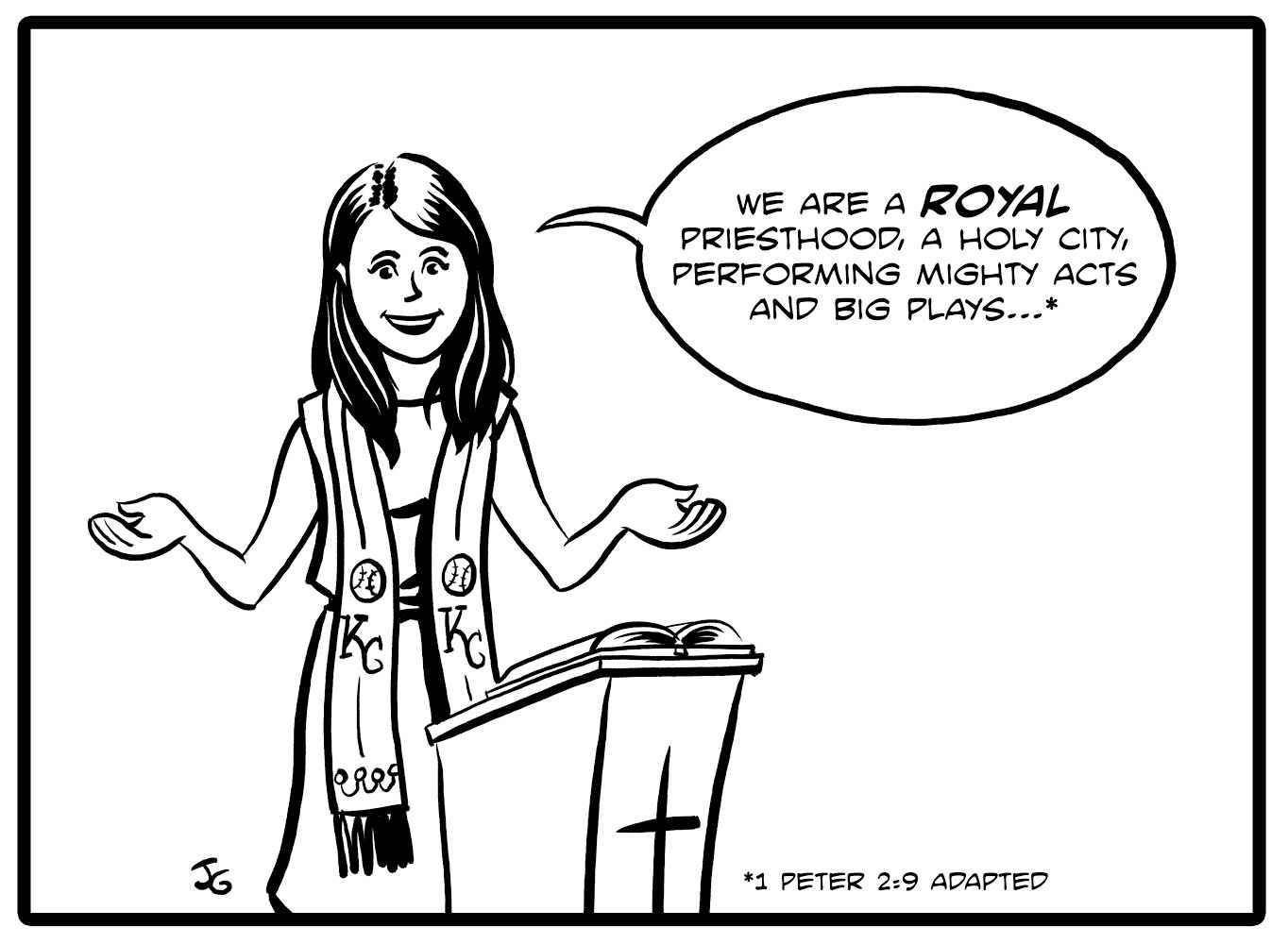
Linda Graham dressed up as a Royals fan for Halloween.

Linda Graham dressed up as a Royals fan for Halloween.

Royal fans across the country have devoted enormous amounts of resources (time, money, energy, etc.) in order to cheer on their Kansas City Royals. The over half-million people at the parade yesterday gave up many things to be there. We had our different reasons for going, but I would guess that most everyone who attended feels royally exhausted today, including those who had to clean up after us.

It was thrilling to feel the energy of the crowd and  watch the sea of blue grow and grow on a beautiful November day. I also felt keenly aware of the fact that for every person who attended, there was someone else in the city who could care less about the Royals success, or who felt royally put out/off by this celebration. We probably all know parents who were scrambling to find child care, or perhaps we were among those who were late to appointments or work due to the traffic, or maybe some important things got cancelled or postponed. It was a royal mess for some and a royal celebration for others.

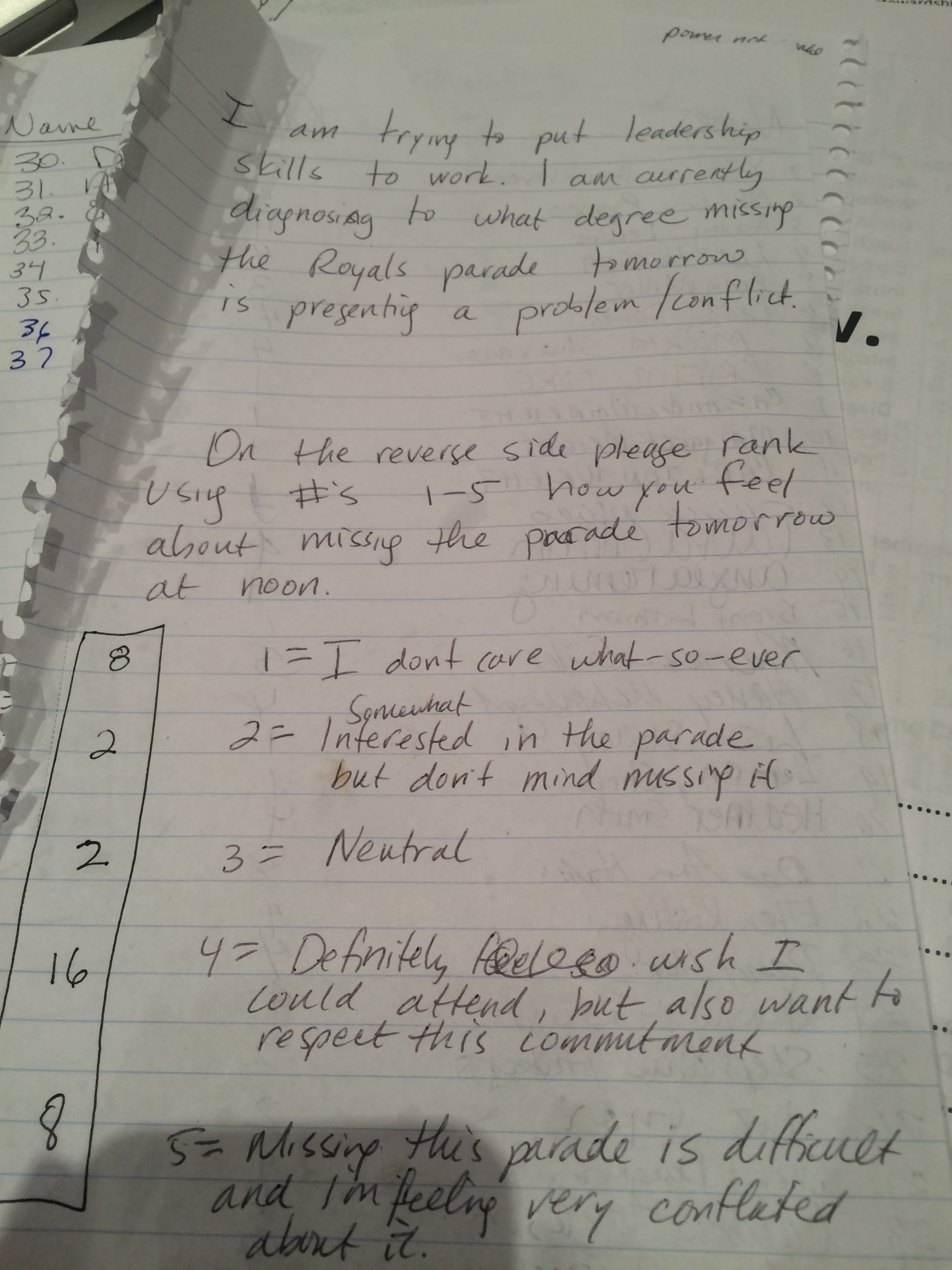
My very scientific survey that I passed out at lunch.

My very scientific survey that I passed out at lunch.

Case in point: On Monday I was participating in a three-day KS Leadership conference. I decided to have some fun with the leadership principles I was learning about and so I started a survey in order to test the different points of view in the room. Out of 36 participants, eight people said they could care less about the Royals parade and eight people said that they would consider missing out on the conference in order to attend the parade (I was one of the eight who wanted to go to the parade). The rest were somewhere in between on a scale from 1-5. The leaders of the conference took this survey and ran with it. They led us in a process whereby we heard different people reflect on their values, their frustrations, competing values, and annoyances. It got heated at times when someone said, “I’m not judging here, but clearly some here care more about becoming good leaders and others care more about baseball.” The KS Leadership Center staff was remarkable in helping attendees hear multiple perspectives and explore competing interests.

While a lot of people commented on the sense of community they felt at the parade, I actually think this conference experience was closer to true community because we were all asked to think about our assumptions, competing values, and decision making process. This is the harder kind of community to achieve, but perhaps the stronger kind.

I don’t know if I made the right decision when I left this conference and attended the parade. Perhaps there wasn’t a right and wrong in this situation. What feels right is that I didn’t just slip out the back door and instead, helped start a group conversation about values, priorities, and choices. Thankfully when I arrived back for day 3 of this conference  I was met with nothing but smiles and a hot cup of coffee.

I’m still deciding whether or not I will reference the Royals on Sunday. If it was up to my loving partner, I would move on from baseball. Whether I preach about baseball or not, I hope that Rainbow continues to be a place of true community, where we learn from one another and remain open to multiple perspectives all year long as we experience the various successes, celebrations, tough decisions, mistakes, and failures that make up life. That’s to me what it means to be a true royal priesthood.

Ruth Harder

Posted in Uncategorized | Leave a comment

Team Rainbow

11136236_10153203259580953_858042894444921560_o

Picture taken on April 18, 2015 with the caption, “And the slow journey begins.”

I’ve never paid attention to an entire season of baseball until this year, and boy has it felt long. Whether your favorite team has a winning or losing season doesn’t matter; these teams play night after long night. I found myself checking scores constantly, usually early in the morning since I could rarely stay up for the finish.

There have been some spectacular moments. There have also been losing streaks, mistakes, slumps, fights, and ejections. The failures are always sprinkled in with the successes, the amazing with the mundane.

Isn’t that how life goes? Isn’t that how church life goes (hopefully without the ejections)?

Some extraordinary things are happening on Team Rainbow each and every day, and as a pastor I feel as though I get a front row seat all season long. Of course not everything is spectacular. We face challenges as a church community and as families and individuals. Some days we might not feel in sync with one another, or we might miss the mark. Or we might argue, question the call, and wish for an umpire review. The seasons drag on and on at times. Still, most of us continue to do our best to show up, stay focused, and offer our gifts and resources. Hopefully every now and again, we will glimpse the spectacular within the mundane.

As the baseball season winds down, the church year begins. Actually, I like to think that the church is in spring training right now. Our official church year starts with the first Sunday of Advent (November 29). We are setting some program and financial goals for the new year ahead, getting to know some new players on the team, and figuring out who will serve where. And while Royals fans keep hoping for an October/November miracle, we will hope for some miracles of our own in December and beyond.

And so with that, here’s an incomplete highlight reel from season 2015. Let’s go Rainbow (clap, clap, clappy, clap)! Remember: The little things/plays matter!

This slideshow requires JavaScript.


Posted in Uncategorized | 1 Comment

Pair of bells

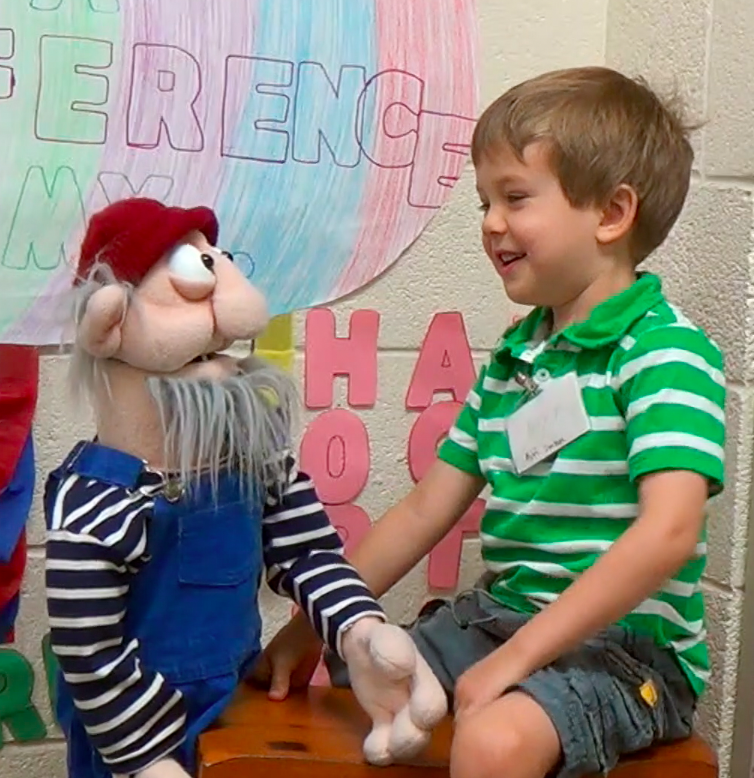
arriThe five video clips below consist of Uncle Gottfried asking me questions about Jesus’ parables. For those who haven’t met Uncle Gottfried, he’s a regular around Rainbow. In German the name Gottfried means man of peace or God’s peace. Like all characters who strive for true peace, Uncle Gottfried asks a lot of questions, and as a result he sometimes becomes the instigator or agitator. He does this while remaining curious, playful, loving, and oh-s0-witty.  You can see Uncle Gottfried interacting with the WorshipArts group at Rainbow by clicking here and scrolling to the bottom of the page.

Introduction to parables:

Parable of the Talents

Parable of the Leaven

Like a good neighbor!

Lost son(s)

Special thanks to Jesse Graber and Mike Horner for their creative help on this project.

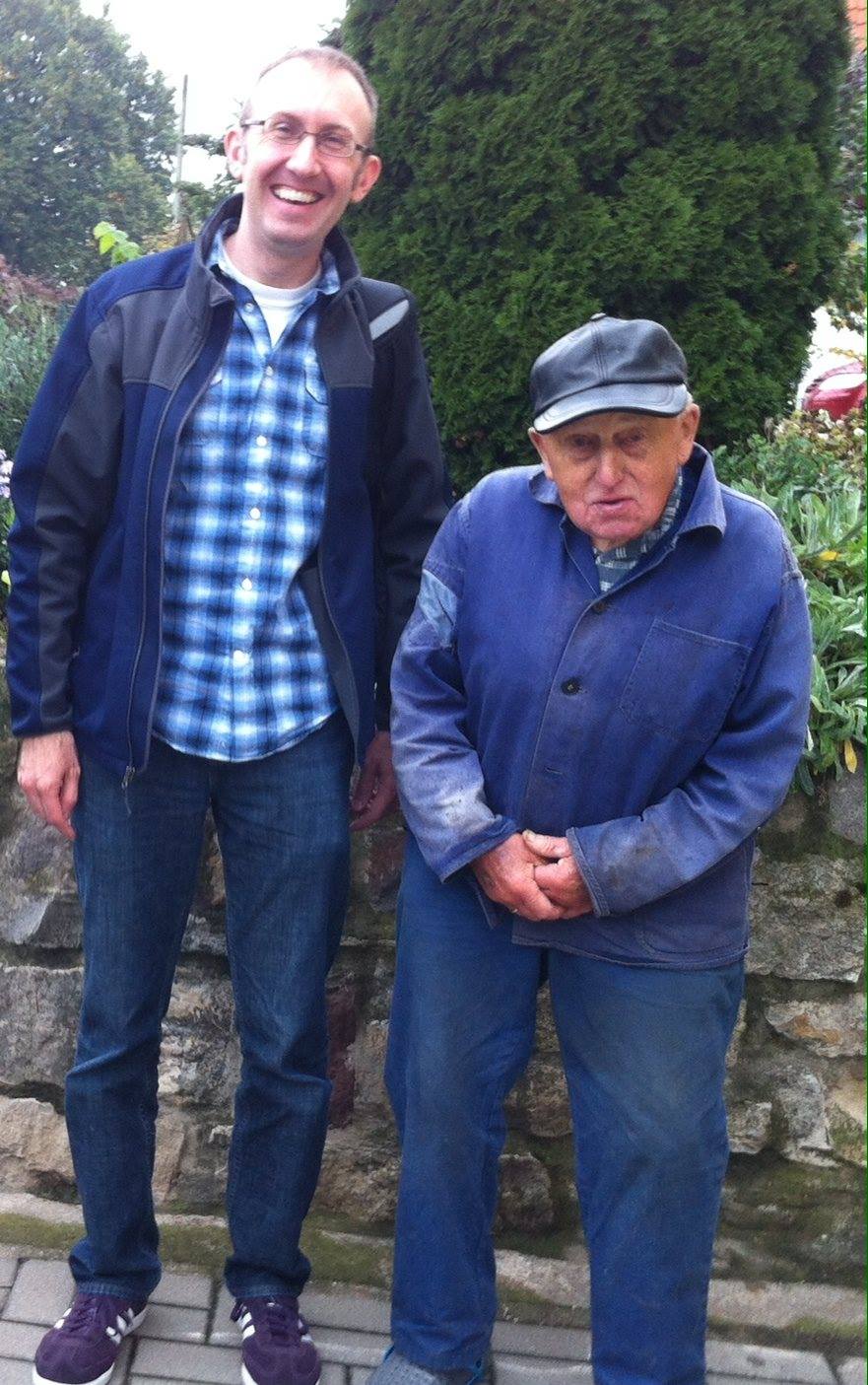
Mike Horner and his great Onkel Gottfried in eastern Germany. As Mike says, "Gottfried is almost 89 but still rides his bike on the cobblestone streets of his village, Gottesgnaden, to get to his garden and tend to his rabbits. My Oma, Gottfried's older sister, was a bit taller than he is, but not by much."

Mike Horner and his great Onkel Gottfried in eastern Germany. As Mike says, “Gottfried is almost 89 but still rides his bike on the cobblestone streets of his village, Gottesgnaden, to get to his garden and tend to his rabbits. My Oma, Gottfried’s older sister, was a bit taller than he is, but not by much.”


Posted in Uncategorized | Leave a comment

Little things matter

Special thanks to Tanya Ortman for sharing the following reflection and blessing last Sunday at Rainbow:

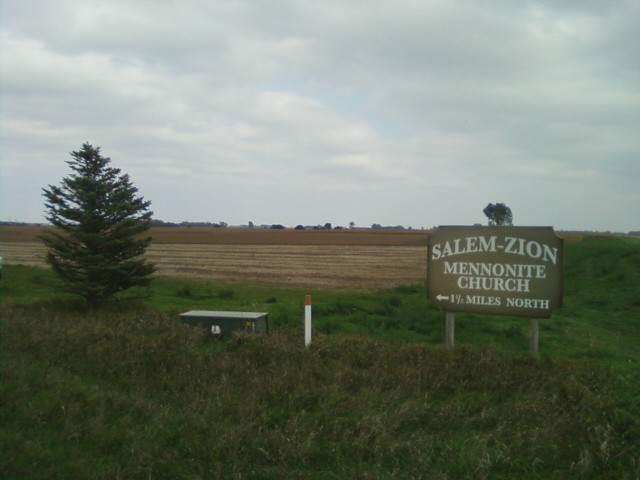
I grew up east of the small town of Freeman, SD. The Freeman area is home to several Mennonite churches, two of which are located east of town about two miles from each other along what we call “the church road.” They are informally known as the South and North churches because of how they are directionally located from each other. Right in between these two churches runs and east-west road which quite a lot of folks drive on their way to church, turning either north or south to get to church.

image2For many years, longer than I’ve been around, a pine tree has towered near the intersection of the church road and this east-west road. This tree was originally planted near a one-room school house. My dad didn’t attend that school but remembers playing under the shade of this tree during a rally day back during his primary school days. This tree has been around a while. The school house has been gone for years and for many of us the tree now marks the church road intersection. It’s shape is unique and easy to pick out over the flat plains, against the horizon. It’s a marker, a long-lived beacon of sorts. Something that those of us who drive by all the time know like the back of our hands. It’s roots must surely run deep.

During the summer of 1996 I was hanging out in South Dakota, waiting to leave for my term of service with Mennonite Central Committee in the Philippines. While at home I was asked to help lead the children’s activities for a church conference being held locally. I used a creation care theme and one of the activities was planting a tree. I wanted to plant it in a place that was visible, one that those kids might have a chance of remembering or noticing later. I decided to ask the landowner who owns land at that same intersection where the tree towers if I might plant another tree. The landowner said yes so our little group planted a tree. Not to compete but rather as an act of hope, or maybe faith, that the rootedness will continue.

image4When Ruth asked if I would share this morning she in particular mentioned this story about the tree. And at first when I tried to remember that night when Rod, Keith and I shared stories of our faith journey I had a little panic. Why had I shared that story? I think it is significant to me for a couple reasons.

One is that that tree, the church road tree, has some level of community significance and of all things it marks the corner where I turned to go to church every Sunday while I was growing up. I didn’t need the marker, but it was there and has been forever imprinted in my brain. In kind of a foundational sort of way. Just as church and my faith community there have been so important and truly laid the foundation for the person I have become.  There were so many people and events that influenced my faith through my growing up years—too many to name—but this tree kind of symbolizes them all in it’s perfect, yet certainly not perfect, creation.

Secondly, my desire to plant another tree, which wasn’t very premeditated or well thought out at the time, I think speaks to my struggle throughout the years to figure out how to actively live out my faith. I’m always looking for things to do. I’m a doer. I want to fix things. I want something to grasp on to. And while I love the concept of grace I am also convinced that the little things in life matter. Maybe planting a tree matters. Maybe no one else will notice but a bird might find shelter. Or a kid might build a fort underneath. Or maybe it will soak up some impurities from the air. Or maybe it will grow into another tall tree, marking the way for someone down the road. History might repeat itself.

And maybe this one little act will inspire more from within me. I hope so. I know I look around this community of believers and find inspiration each and every Sunday. We aren’t all at our best all the time, but that’s part of what being in a church community is about.  Helping each other out, building one another up, challenging each other to be the best we can be. All the while understanding that we come from different places and can’t agree all the time. We are all searching to find out what it means to be part of God’s Kindom.*

Hannah and Andrew, I truly am happy you’ve made the decision to be baptized. It’s an honor to be here to support you in that decision today. May you remember this day fondly as you go forward, knowing that your commitment to following Jesus is truly a journey with ups and downs but that your Rainbow community will lovingly walk with you through it all.

*Kindom is becoming a common respelling of Kingdom designed to highlight mutual relationships and kinship rather than the hierarchical relationships of the patriarchal system.
Posted in Uncategorized | Leave a comment

I want to believe; help my unbelief!

IMG_5214When I was baptized in 1995, I remember asking my dad, who was the pastor, whether I would change or somehow be different as a result of baptism. He delivered a long, thoughtful pause before saying, “I believe something happens.” Following another long pause he said, “What that something is is a mystery.”

Exactly six years ago I would pose a similar question to my dad. This time I wondered whether I would change as a result of ordination. Again he said, “I want to believe something happens,” but this time I finished his sentence with, “yeah I know, it’s a mystery.”

Baptism is mystifying for sure (some more “mistier” than others), and yet I continue to believe or at least I want to believe that these are not just empty rituals, void of meaning or significance. Nor are these moments EVERYTHING. The church is not a baptized-only club, and I don’t believe in a God who only embraces those with baptismal certificates from their local church. And yet every time I accompany people through the baptismal process, I feel as if I am standing on holy ground. This doesn’t mean I don’t have my share of questions and doubt. None of us can say for certain what happens (or doesn’t happen) in baptism. I took great comfort when I heard a pastor say once that all baptismal services should include this phrase from Mark 9: 24: “I believe; help my unbelief!”

A couple months ago I told Andrew and Hannah, who will be baptized this Sunday at Rainbow, that what I remember most from my baptism is looking out at the congregation and seeing people who loved me and whom I loved (or tried to love) in return. I can still see their faces and smiles. I can still feel their embrace, especially when I slip into despair. Same goes for my ordination. It was sacred ground, made all the more sacred by the people accompanying me.

A photo from my ordination service six years ago. Fun game: Try to find my husband Jesse. He was a little slow off the pew. Even he youth group beat him up front.

A photo from my ordination service six years ago. Fun game: Try to find my husband Jesse. He was a little slow off the pew. Even the youth group beat him up front.

I can’t presume to know what baptism (or ordination) is or isn’t. No one person, pastor, or denomination has a monopoly on those definitions. And yet I have long hoped to surround myself with people who are searching for the living God, and who remain ever-humble in that search, but search nonetheless. And so I will ask Andrew and Hannah to kneel on Sunday, and I will get as much water in my tiny hands, and with misty eyes and a cracked voice, I will baptize them in the name of the Creator, Redeemer, and Sustainer. I will then bid them rise, and perhaps what I hope more than anything is that as they stand they will see a smiling congregation, ready and eager to embrace them as they are, encouraging them to become all they might be as they seek to orientate their lives around the teachings of Jesus.

Last but not least, I invite you to listen to one of the most interesting musical reflections on baptism that I’ve ever heard by Cynthia Hopkins.

Posted in Uncategorized | Leave a comment

First century jazz

I listen to jazz

Poor Jesus. Not only does he get stuck with the same white robe and sandals for all of eternity; now he is stuck on some bench with Billy when he could be listening to jazz.

Many people try to make connections between Jesus and jazz.  For example, Jay McDaniel writes that, “jazz is about about creating music that keeps listeners wondering what’s next, and finding a novel context within which to explore old truths…Relaxed yet alert, hospitable to strangers, delighted by surprise, honest about suffering, and yet trusting in fresh possibilities, jazz is a hopeful mind.”

That sounds a little like what Jesus taught right?

Or what about this quote from McDaniel?


The idea of jazz is like the idea of justice…It is the image of people coming together, listening to one another, respecting one another’s talents, and trying to create something beautiful together. They are free to express themselves as individuals, having been given the opportunity to develop their unique creative potentials. And yet they also have the humility to let others solo without having to be the center of attention. They are accountable for themselves and to one another, yet they are also forgiving, making the best of their own and other’s mistakes. As they play together they trust in the availability of fresh possibilities.

Fortunately for us (and Jesus), Dr. Eugene Lowry will be at Rainbow on September 13 offering a sermon/concert called “Dancing the edge of mystery: Exploring the evocative power of music in the presence of the ultimate mystery.” Dr. Lowry has served as Professor of Preaching for over 30 years at St. Paul School of Theology, and has traveled widely as a preacher, teacher, and pianist.

As preparation, I invite you to read a sermon by my good friend, pastor, and jazz connoisseur John Cheadle Rich. It’s called “Jesus Jazz.” Find your Bible, get your jazz recordings out, and enjoy the ride! Oh, and if you see Poor Billy sitting alone on a bench please assure him that the Son of God can probably listen to prayers and jazz at the same time.

Click here to read the sermon: Jesus Jazz


Posted in Uncategorized | Leave a comment

Communion before conversion

“Catholic pt. in 405 wants communion before conversion. Please come asap.”

I had only been a hospital student chaplain for a month. This was my first night on call, which meant I was the only chaplain on site in a 700 bed facility in Chicago. Nothing prepared me for the pages I received that night, including this one above.

What should I, an inexperienced Mennonite hospital chaplain, with no ministry credentials yet to my name, do? Sure, I could call the on-call priest who lived just a couple miles away, but first I needed to respond to this page request asap.

As I found my way to the 4th floor I wondered all sorts of things: What was this patient converting to, why, and why now and here? And more importantly, why does she want to take communion one last time? In Mennonite tradition, conversion/baptism usually becomes before communion, not after.

“I understand you want communion before your conversion,” I said, trying to hide my confusion, disbelief, and the questions I really wanted to ask.

“Yeah, could we arrange that in the next couple of hours?,” the patient said in a relaxed, no-big-deal sort of way.

“Sure,” I said, in my own no-big-deal sort of way.

“First can you tell me more about your conversion?”

“The doctors really should be the ones to tell you about that,” she said with a laugh. “Ask them.”

I left the room even more confused than when I first arrived. I found a nurse who calmly explained that a conversion was a medical procedure involving the heart, as in cardioversion. “We call it conversion for short,” she said. “I can see why that was confusing, she continued. “Both kind of conversions involve the heart, huh?”

Relieved and embarrassed, I picked up the phone and called the priest. When he arrived a short time later I told him that I had been preparing for a different kind of conversion. We both agreed that when it came to understanding medical terms and sacraments like communion, the learning curve was steep. I asked if we could keep this between the two of us and he said, “Not a chance, this is way too good.” The rest of the year my fellow chaplains would ask me questions like, “Hey Mennonite, have you had any more conversion calls?”

Sometimes I still feel out of my league when discussing, serving, partaking in, or presiding over communion. The learning curve continues. Gordon Zerbe, from Canadian Mennonite University, articulates some of the many questions that I wrestle with:

What kind of event is it: sign, corporate symbol, sacrament, ordinance, ceremony, ritual? What really happens in the event? Who should preside and serve? What occasions or contexts are appropriate for enacting the event: formal church gatherings only, or also other informal gatherings of Christians? Who is welcome to participate? What preparatory activities are proper: self examination, corporate sharing or reconciliation, table fellowship? How should the physical dynamics be orchestrated: rows, queue toward a table, circles around tables, common cup, individual cups? When and how often is it best celebrated? How has Mennonite practice of it evolved? How experimental might the celebration be? What varied biblical texts or themes might be used to enhance the practice? Finally, what should we call it: Communion (from “koinonia” in 1 Corinthians 10:16, the Eucharist (“thanksgiving,” from 1 Cor. 11:24), the Lord’s Supper (from 1 Cor. 11:20), the Agape (“love feast,” in Jude 12)?

-Vision: A Journal for Church and Theology: Vol. 2 No. 1, Spring 2001. Published by the Institute of Mennonite Studies at AMBS and Canadian Mennonite University.

I won’t address all of these questions at Rainbow on Sunday. We might all have heart trouble if I tried to do that. Instead I will share a variety of communion stories and reflections. Then all will be invited to receive the gifts of cup and bread during our first of the month conversion, I mean communion. Hope to see you on Sunday.

10891840_10205727602092637_2025846430515970848_n

Posted in Uncategorized | Leave a comment

Preaching “right” from the Bible

IMG_0024When I arrived as Rainbow’s new pastor two years ago I was gifted with colorful slips of paper which had people’s worries, prayers, and hopes written on them. I reviewed these slips of paper recently and smiled when I read the following hope: “That our new pastor will preach right from the Bible.” A part of me was relieved that this wasn’t listed as a worry, and then another part of me wondered what this person meant by “right.” Right as in direct or right as in correct? Maybe both?

I’ve been trained in the school of thought that all we do in worship pivots around scripture. The songs we sing, the prayers we offer, the sermons all connect back to the selected scripture. Scripture, I’ve been taught, is the anchor that connects us to the past as well as to our fellow Christians around the world. And yet Christians will forever disagree on whether or not this anchor is movable,  adjustable, or fixed for all time. What we understand about ourselves, about the world, about science is always changing. Life experiences move us every which way. Is there, many of us wonder, a way to probe scripture, remain curious toward what is contained in and what inspired scripture without worshiping scripture or idolizing the Bible? Is there a way to pivot around scripture in a way that still allows us to question, critique, and challenge?

This coming Sunday we will take a look at what the Bible says about the Bible. For example, read Psalm 119, Nehemiah 8:1-12, and Luke 4:14-21. (Stars in your crown for anyone who can properly pronounce all the names in the Nehemiah reading.) We will think together about the way scripture may or may not anchor our worship and our lives. My working title is, “Stories that anchor us, experiences that move us.”

As further preparation, I invite everyone to read and reflect on the following questions written by Mary E. Klassen, sister to Rainbow member Carmen Shelly and director of communications at Anabaptist Mennonite Biblical Seminary (AMBS). I first met Mary when I was a student at AMBS. Already then I admired the way she encouraged worship leaders, congregational members, and pastors to care for the oral presentation of scripture. In her article “Making the music of scripture,” Mary asks:

  • How often in our worship is scripture viewed as not much more than a routine segment of the service? Is it only a prelude to the sermon?
  • How often is scripture read without expression and seemingly without preparation? Do we view the oral reading of scripture on Sunday mornings as something anyone can do because we all can read? We want to include children and adults with varying skills and backgrounds in our worship services, so do we view scripture reading as an opportunity to be inclusive at the expense of being effective?
  • When you listen or read scripture ask yourself: Is it poetry, law, story, wisdom? How does the passage contribute to the whole of God’s message to us in scripture? In what ways can this particular text make a connection between the story of God long ago and us now?
  • Consider the contexts of the reading. Within the text itself, what comes immediately before and after the passage? Within the worship service, is it a call to worship, is it for meditation and prayer, does it lay the foundation for the sermon?

Mary’s full article can be found in Vision: A Journal for Church and Theology: Vol. 6 No. 1, Spring 2005. Published by the Institute of Mennonite Studies at AMBS and Canadian Mennonite University.

Finally, in case you missed the last two worship services, or in case you want to review these sermons for further review and reflection, here you go:

August 16: The warship that is worship

August 23: Singing for our lives


Posted in Uncategorized | Leave a comment

Noted

Thank you to Rainbow Music Ministries Director Roseann Penner Kaufman for writing the following guest blog post.

Photo caption: Grandma Goertz. At least I know where my cowlick comes from.

Grandma Goertz. At least I know where my cowlick comes from.

This is my grandmother, Adelia Schmidt Goertz. She is 97 in this photo, and lived 5 more years, propelled mostly by her positive attitude. Shortly after this photo was taken, I asked her how she spent her time. Her hearing, vision and mobility were mostly gone, but she didn’t complain (much). She said, “I spend time reciting the scripture verses I memorized throughout my life, but I don’t remember all the details anymore. Mostly I sing hymns in my head. Sometimes I forget some of the verses, but I just hum through those parts until I remember the words again.” Hymns were her prayer and strength.

Grandma had her repertoire. I realize that if I’m fortunate enough to make it to 102, my list of sustaining hymns will be quite different from my grandmother’s. I grew up in a family that sang as a habit. My mother sang as she washed the dishes. My dad sang in the car (loudly, in German). Hymns, mostly. Texts with theology that now makes me cringe, but the tunes are in my bones, mixed in there with all the more academic and theologically and culturally diverse stuff I’ve taken in since.

I now consider it part of my job to tend our congregational repertoire. Not only do I spend time each week considering how a particular piece of music fits into the theme and flow of the service, but how it serves to sustain our longer view of congregational singing resources. It’s a difficult balance, to choose what people find “familiar” (try to define that in our diverse group) as well as maintain a sense of freshness and vitality that keeps our singing energized. It feels like an important responsibility. Since 1999 I’ve kept a list of all the hymns we’ve done in worship. There are 658 hymns in the blue Hymnal: a worship book. Any guesses as to how many we haven’t sung? The answer is at the end of this blog; keep reading.

The choir plays a part in what is chosen for worship. Every week during choir season we spend time in rehearsal singing the hymns for the coming Sunday. This is valuable feedback – often a hymn I think is familiar elicits blank stares, and I’m frequently questioned about language and/or theology that I’ve conveniently overlooked. (So here’s a not-so-subtle plug for choir participants – if you want to influence music in worship, join the choir — first gathering is a potluck on September 9.)

As we spend time during these next few weeks thinking about worship, give some thought to your own repertoire as well. What sustains you? What distracts from your worship experience? What would you like to share that could be meaningful to others? Mostly, I hope you sing. Frequently and with joy.

Number of hymns in we haven’t sung since 1999: 395

Posted in Uncategorized | 1 Comment

The Great (De)Commission

Last winter I felt as if I was preparing for Mennonite Mission Network’s (MMN) version of NCAA’s Selection Sunday. MMN was about to announce which Mennonite Voluntary Service (MVS) Units would continue and which units would close in August 2015. I was rooting for two units in particular—the Kansas City Unit where I live and pastor and the Evansville Unit where my husband completed two years of MVS, and where I lived for a short time as an associate member. Both sites had impressive rosters, records, and statistics, both sites wanted to continue, and I knew first-hand that both sites had much to offer future MVS’ers. Last December when the caller ID said Mennonite Mission Network I picked up the phone and awaited the news with both anticipation and fear. The news, as I feared, was mixed. Yes, Kansas City was one of the eleven units that would survive and no, Evansville would not continue as an official MVS site.

My husband, who now serves on the Kansas City MVS Support Board, and I spent the next many months wondering why Team Evansville didn’t make the cut. We commiserated with our Evansville friends, many of whom now feel like family. We dusted off our Evansville MVS scrapbooks and photo albums and talked about how our lives would be poorer had my husband not done MVS in Evansville. Evansville was unique in several ways. For one, it was one of the only units at that time that offered something of an art and music focus for my husband. Another reason this MVS site was unique is that unlike most of the other units, there was not a Mennonite Church in the city of Evansville. I’m told that in 1985 when the Evansville Unit went through the initial application with what was then called the Mennonite Board of Missions of the General Conference Church, one of the things that was attractive about Evansville was that it didn’t have a Mennonite Church. Sending people to places near and far was part of their understanding of  The Great Commission (Matthew 28:16-20). The disciples were sent into unknown territories without a lot of guarantees other than that Jesus would be with them.

I don’t think the fact that Evansville does not have a Mennonite Church was the primary reason for closing Evansville, but in hindsight my husband and I agree that living and working in a place outside of the Mennonite bubble was just what the two of us born and raised Kansas Mennonites needed. We both had four wonderful years at a Mennonite liberal arts school Bethel College. After that we were ready to branch out and learn and work alongside people of different faiths and traditions. Sure, there were a few Mennonites here and there in Evansville and we enjoyed monthly Mennonite gatherings with them, but as we said often, “it’s probably best that we don’t start a Mennonite church because we’re bound to split anyway.” I often tell people that when I studied Spanish in college I learned just as much about the English language as I did about Spanish. The same could be said about our sense of Mennonite identity and belonging—the more we learned about other faiths and denominational upbringings, the more we learned to situate ourselves as Mennonites in this pluralistic world. It was good, for example, to remember that when most people talk about doing service, many assume the reference is to military service.

The people of Evansville make up a big part of our cloud of witnesses and the closing of the MVS unit will not change that. Still, my husband and I couldn’t help but feel sad on August 1 as we traveled the familiar roads to Evansville for an MVS Decommissioning Service. I thought again of the Great Commission as told in Matthew. Just because Team MVS Evansville is ending doesn’t mean the Great Commission has ended. Still, once you’ve experienced a glimpse of the Great Commission here on earth, once you’ve gardened, built custom bikes, created artwork indoors and out, and tutored neighborhood children, one can’t help but wonder what might have been had this unit continued.

Here are some glimpses into this remarkable place/community called Patchwork Central, a neighborhood ministry that served as both the local congregation for all and the work site for many Evansville VSers. Patchwork’s activities include worship services, children’s programming, a food pantry, a bicycle program, a health ministry, and general neighborhood hospitality.

This slideshow requires JavaScript.

This decommissioning was like most commissioning services: there was singing, praying, hugs, sharing stories and memories, crying, and yes, some laughing. Biff Weidman, the Mennonite who helped secure Evansville as an MVS site in 1988, read from the first book of the New Testament (Matthew 5:1-12) and Elizabeth Syre, the last MVS’er to arrive at Evansville, read a passage from the last book of the New Testament (Revelation 21). There was and is much to be grateful for. Our memories and our friendships are still very much alive. An enduring spirit lives on inspiring all of us in the work of service, community, and justice throughout the world, in joy without end. “We look to the future, to God’s future,” we said in the Litany of Decommissioning, “and know that the Evansville MVS Unit is not dead but will rise again in new and surprising ways. It will rise again in moments of service and song, in acts of mercy and justice, in organizations and programs that will not even know the debt they owe Evansville MVS, and in lives transformed that may not even understand the connection.”  Miriam Regier, the last Evansville Vs’er to leave Evansville, summed it up nicely when she said, “This place is a little bit of the gospel I love to share.” How I hope that future MVS’ers in Kansas City and the ten other sites will say the same upon their departure.
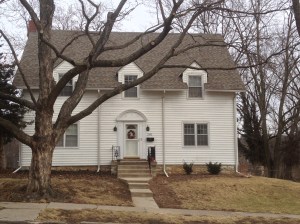
vshouse

Kansas City MVS house

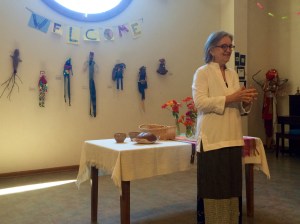
I close with a prayer offered on August 2 by former Evansville Local Site Coordinator Nelia Kimbrough. Nelia, an ordained Methodist Pastor, was one of my husband’s MVS supervisor at Patchwork Central, and  she officiated at our wedding in 2002. Nelia was one of the women who inspired me to go to Mennonite Seminary, and she preached at my ordination service in 2009 at Bethel College Mennonite Church.
IMG_4751 (1)

Nelia Kimbrough

We thank you for this place, a place of love, acceptance, a place of challenge, a place of laughter, a place of wonderful, abundant food, a place of art, growth and healing. God, we give you thanks and praise for this particular moment when we lift up all the work of the voluntary service unit of Patchwork Central Community. For all of the years of service that have been given, for all of these wonderful, beautiful, young and talented young people who have come and been willing to do the work and who have been willing to go forth into the world to continue the work.

We pray that as we have gathered together that we will be nourished by the stories we have told; that our memories will be deepened of what it means to come together and work as a community; of what it means to come and be willing to bear the load of what it means to come and to bring ideas and to see them come to fruition; and to be challenged, and be questioned, and to be called in what we are doing, yet in the midst of all that, to grow.

We lift up all of the other units of voluntary service that will continue as official units of the Mennonite Church. We ask your blessing upon them. We ask that their time will be rich in service and we pray that here in this place, the memory and the spirit of the service of the MVS unit will continue to grow and carry forth in all the work that was done.

We give thanks and praise for the gift of your Son Jesus who showed us the way, a way of love and forgiveness, a way of gathering all those on the edges and the margins in opening the table so that everyone can be included.
 
God, we give you thanks and praise for life itself. For the gift of drawing breath; For the gift of knowing this life, this way.

Amen.

Posted in Uncategorized | Leave a comment