Communal capes of blessing

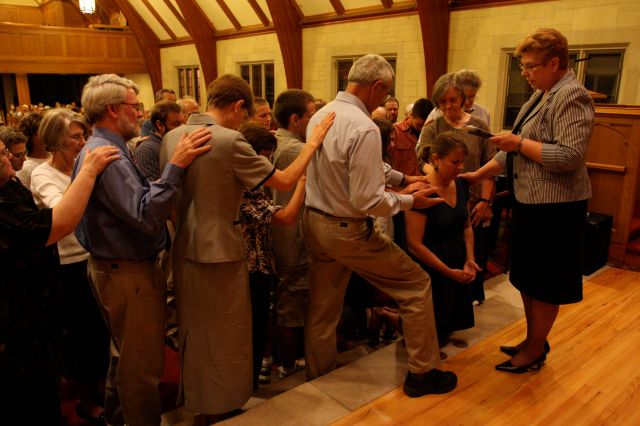
As we prepare to join in a ministerial licensing service for Rosi Penner Kaufman this coming Sunday, May 13, I’m reminded of times I have received or led ministerial-related blessings and prayers. Here I am at my ordination service at Bethel College Mennonite Church.

ordination


And here is what I wrote to a friend recently about this occasion:

I have great memories of being in the middle of team huddles. And so I figured this was just another team huddle with fewer high fives and sweat, and without a coach or teammates yelling at me. It was uncomfortable at first to kneel down, but when I saw my family and the community come forward, I sort of surrendered to the moment. I let myself be crowded for a moment, and affirmed. It took me back years ago, to when I was a little girl standing in a circle of worshiping adults, lifting my hands up to God, hoping I could reach whatever they were reaching for.

I don’t remember most of the words shared on ordination day. I fell into that place I go to sometimes when I pray, or when I stood at the free throw line during an important basketball game—where people, sounds, distractions drop off and I’m just there, alone but somehow not alone, in an empty, but not-so-empty space. Dear friend Kara, who I didn’t even know was there (last I knew she was living in a remote Alaskan lodge), was seated on the last row of the balcony. The next day she said that from where she was seated up high, the community draped around me looked as if we were forming some kind of communal, Mennonite superhero cape.

We won’t ask Rosi to kneel for the laying on of hands this coming Sunday. We will save that for a future ordination service, which we hope will be about two years from now. Still, as we join in licensing her toward ordination on Sunday, my hope is that we might sink into a place of deep prayer. May we affirm her gifts of ministry, and may we continue to form that communal cape of support and love, looking to the greatest superhero of all, Jesus.

Posted in Uncategorized | Leave a comment

Prayers, spring and Leo

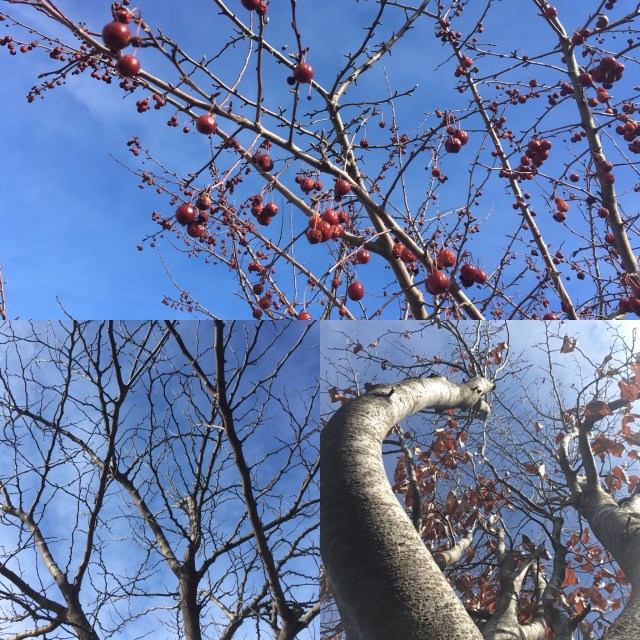
On Earth Day, April 22, we will compost our Rainbow prayers collected over this past year. We’ve done this for the last several years, as shown by these pictures.


Rosi found a beautiful hymn for this occasion, which you can listen to here:

Silence my soul these trees are prayers

              I asked the tree, tell me about God. . .Then it blossomed

          Silence my soul the sun is prayer. . .Then is shined

          Silence my soul the moon is prayer. . .Then it glowed

          Silence my soul the earth is prayer. . .Then it gave life.

This will be especially meaningful to do this coming Sunday given the fact that yesterday, one of Rainbow’s charter members died at the age of 95. His name was Leo and he would have been 96 on April 30. Leo came into the world in spring and he died in spring.  And during his long and meaningful life, Leo saw countless flowers bloom and die, bloom and die, and on and on. He was so thoughtful about the birth and death cycle of all things, including his own inevitable death.

A few months ago I asked Leo what his favorite spring flower was and he said the daffodils. They are the reliable and sturdy ones, often able to bounce back even after a late spring freeze.

D3303817-2C7D-48EA-9118-54CB1842D167 (1)

Daffodils blooming in Whitmore Playground.

And so in honor of Leo, this morning I held the cylinder of Rainbow prayers and recited this poem by John Keats called “A thing of beauty.”  May Leo rest in peace, and may our prayers, lives, and death blossom in God’s unfolding of time and eternity.

A thing of beauty is a joy for ever:
Its lovliness increases; it will never
Pass into nothingness; but still will keep
A bower quiet for us, and a sleep
Full of sweet dreams, and health, and quiet breathing.
Therefore, on every morrow, are we wreathing
A flowery band to bind us to the earth,
Spite of despondence, of the inhuman dearth
Of noble natures, of the gloomy days,
Of all the unhealthy and o’er-darkn’d ways
Made for our searching: yes, in spite of all,
Some shape of beauty moves away the pall
From our dark spirits. Such the sun, the moon,
Trees old and young, sprouting a shady boon
For simple sheep; and such are daffodils
With the green world they live in; and clear rills
That for themselves a cooling covert make
‘Gainst the hot season; the mid-forest brake,
Rich with a sprinkling of fair musk-rose blooms:
And such too is the grandeur of the dooms
We have imagined for the mighty dead;
An endless fountain of immortal drink,
Pouring unto us from the heaven’s brink.


Posted in Uncategorized | 1 Comment

Scared. Scarred. Sacred. 

“The scared meal” was not how I had intended to advertise our Maundy Thursday communion gathering. I blame auto correct for that, although come to think of it, the disciples were surely scared, especially given Jesus’ talk about future suffering. And they were certainly scarred. These three words—scared, scarred and sacred—so close in spelling, get all mixed together in story of Christianity.

Think, for example, about the gospel accounts of the post-resurrection Jesus using his hands, especially the scar marks, to prove he was who he said he was. In the gospel of John, Thomas goes so far to insist on putting his finger in the mark of the nails and his hand on Jesus’ injured side. He would believe no other way. Following Thomas’ lead, many Christians today experience Jesus as One who stands with wounded hands, welcoming our wounds and scars, whether those wounds are physical or emotional, healed, still healing, or not healed at all. Jesus, the One who takes what is scary and scarred, weaving a more sacred path with us and for us.

Speaking of scars, when I first became a pastor I was shocked at how many people were willing to show me their scars, both physical and emotional. Today it is not so much shocking as it is humbling. So many of us have healed over scars that we are comfortable talking about and showing, others that remain hidden. And then there are those of us who have barely- healed or not-healing-at-all wounds, and we worry about exposing them to the elements or exposing them whatsoever.

Long ago, a hospital chaplain colleague went so far and suggested that “Show me your scars” might make a good future Sunday school class topic. Interesting to think about, I said, but probably too tough to pull off. Then again, by revealing our often hidden scars and wounds, we’d probably have plenty to teach one another about life’s struggles and possibilities, tragedy and resilience, death and resurrection. It could be sacred even. And most certainly scary.

For now, what I find myself compelled to try is to center my prayer life around the image of Jesus, standing with open, scarred and sacred palms. What if we would do this while imagining The Risen One’s welcome of us, scary wounds and all? And then what if we imagined rising with the One who is Risen, together weaving the more sacred path, scary scars and all?

IMG_0397


Posted in Uncategorized | Leave a comment

The matter of the body

This man (Joseph from Arimathea)  went to Pilate and asked for the body of Jesus. Then he took it down, wrapped it in a linen cloth, and laid it in a rock-hewn tomb where no one had ever been laid. It was the day of Preparation, and the sabbath was beginning. The women who had come with him from Galilee followed, and they saw the tomb and how his body was laid. Then they returned, and prepared spices and ointments. On the sabbath they rested according to the commandment. But on the first day of the week, at early dawn, they came to the tomb, taking the spices that they had prepared.”

-Luke 23: 52-Luke 24:1

These words from Scripture take me to a place just a few miles outside my home town, to a gorgeous plot of land outfitted with a small pond and cabin. This is where First Mennonite Church always held their Easter Sunrise Service. We’d arrive in the dark and my mom, who was often in charge of the service, would busy herself with service details. (Meanwhile I would start dreaming of cinnamon rolls and cider and whatever other goodies people were starting to bring.) Often misty or foggy mornings posed a problem for whatever Easter skit my mom had drummed up across the pond. I, on the other hand, have long thought the stories of Easter are more compelling while watching mist dance on water. The blurrier the drama the better. I suppose that’s because the matter of Jesus’ alive, then dead, then alive again body was (and still is) super blurry for me in terms of what it means. Still today, I much prefer to hear these stories at dawn under the canopy of a darkened, awakening creation versus in broad daylight or under artificial lights.

Fast forward 20 years and I found myself far away from my family and home town church at Easter. That year instead of spending Easter morning with loved ones by a pond, I was serving as a chaplain in a 600-bed hospital in downtown Chicago, standing under the canopy of artificial lights and sounds. Instead of sitting passively waiting for the Easter drama to unfold, I was now standing in the middle of real-life drama, caring for bodies born, alive, dying, and dead. Everything felt blurry as I sought to be present to family members who were facing their own blurriness, sometimes absolute darkness, that comes with grief.

The matter of morgue/funeral home preparations needed to come up eventually, but moving there often felt like its own impossible challenge. And then there was the matter of “late viewings.” This was sometimes available, within certain parameters, for family members who arrived at the hospital after a death, and after the body had been taken to the hospital morgue. I dreaded getting this late viewing page, and the nurses dreaded me coming to them, insisting that one of them come with me because I was too anxious to go alone. One night I couldn’t find anyone available to come with me, so I went to the morgue alone. It was quiet, except for what sounded like a faint, steady rhythm of some kind. Upon investigation, I realized that the nursing staff had not removed this individual’s watch, and so what I was hearing was the tick-tock of time. I had work to do and a family to invite in, but I do remember pausing to take in this mysterious moment in/of time. Tick, tock, tick, tock.

This moment of standing in the presence of a stranger’s deceased body, hearing the tick- tock of time, is one I have returned to often, perhaps as often as I return to the pond where Jesus’ movements through life, death and life again were first introduced to me. So often I feel overwhelming sadness for the endings that are part of life. Any concept of life after death still feels so blurry and non-sensical. But then I hear that tick-tock again, and as I did those years ago, I start humming the hymn to the beat of time, “My Life flows on in endless song, above earth’s lamentations….I catch the sweet, though far-off hymn, that hails a new creation.” And so as I go about Easter preparations this year, I find myself yearning to hear the tick-tock of time and this promise embedded within it, and live as if a new creation is always right around the corner, always unfolding.

Posted in Uncategorized | 2 Comments

No bunny like you

“Wait, Ruth. What do bunnies have to do with Jesus?” I’m pretty sure the junior high boy at church who asked me this question last year quickly wished he hadn’t, because before he knew it, I was giving him some wild, off-the-cuff explanation connecting Jesus to fertility to eggs to sex. He sat there quietly, looking down at his feet and up at the door. I’m pretty sure he left the room before I was finished.

I thought about this conversation recently as I was interviewing someone known as The Guerilla Bunny. Check out the Bunny’s work on Facebook or Instagram!

29196149_1737177443008504_7544607352507334656_o

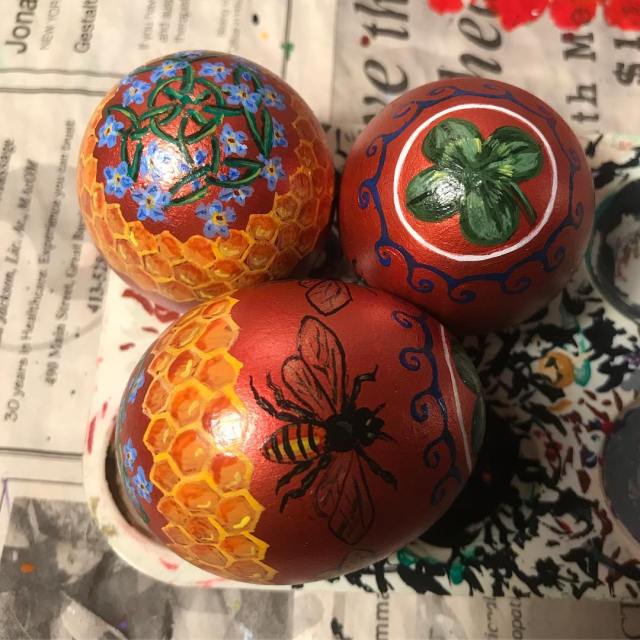
This particular bunny, who wishes to remain anonymous, probably isn’t getting much sleep these days because every year in winter and early spring, this bunny is busy painting between 90-100 eggs to “hide” early on Easter morning in a six-block radius in Stockbridge, MA.  I put “hide” in quotations because they are hidden in plain sight for the public to enjoy and take home (hopefully no more than one egg per person). If you consider the sheer beauty of these eggs and the time it takes the bunny, this is like receiving a $100-400 surprise gift on Easter morning.  Even though The Guerilla Bunny wouldn’t say this, to me it all sounds so biblical—like the women who traveled to Jesus’ tomb before dawn, and who had quite a beautiful surprise waiting for them.

The Guerilla Bunny tells me that the art of painting eggs goes way back, perhaps one of the oldest known decorative arts. Painted ostrich eggs, for example, believed to be from 65,000 years ago, have been recently discovered by archaeologists.  The decorated egg, writes Stephanie Hall, “has been an important symbol in many cultures. They are part of the creation myths of many peoples, the ‘cosmic egg’ from which all or parts of the universe arises. They often symbolize life, renewal, and rebirth. They figure in much of human folklore, used for healing and protection.”

As is the case with most traditions, the tradition of painting eggs spread and was adapted by people of different religious beliefs. Within the Jewish tradition, a pure white roasted egg is often part of the Passover Seder meal. Then Orthodox Christians in Mesopotamia took this tradition and dyed the egg red as a symbol of Christ’s blood. These red eggs are still prominent in the celebration of Easter in parts of the world. You can read more here: https://blogs.loc.gov/folklife/2017/04/decorating-eggs/

Back to The Guerilla Bunny. This particular bunny began the tradition of giving away beautifully painted eggs in 2008. Why? In part, because the bunny struggled to relate to Easter in any kind of meaningful way. The bunny wanted to go beyond the usual pastel colors and symbols of traditional, orthodox Easter and reach deeper into the deep and rich symbols of dying and rising, death and renewal. When I pressed with more questions, the bunny said that ultimately it’s about adding some spark and light to a world that is often full of grimness. The bunny has always tried to address the scary, violent things in the world through and in art. It’s also a wonderful way for the bunny to get to know other cultures, and the images, colors, symbols and patterns particular to each people and tribe.  As the bunny paints each egg, the egg becomes its own, guiding meditation point as the bunny hopes that the right egg will end up in the right hands. It’s also an exercise in giving birth to something, and then letting go of what is born. Each egg is carefully and lovingly painted, never to be seen or held by the bunny again. The bunny leaves no trace of authorship and the bunny expects nothing in return. Amazing.

As Suzy Banks Baum has commented, “The Guerilla Bunny believes that random acts of beauty lift people up. And that people could use a good bit of lifting up these days.” Indeed.

Again, be sure to check out the Bunny’s work on Facebook or Instagram!

Maybe, just maybe, the bunny will be inspired someday to paint a Rainbow-striped egg.

Speaking of Rainbow, all are invited to our annual Easter Egg Hunt in Whitmore Playground on Saturday, March 31 at 10:30am! We have our own one-of-a-kind Easter bunny!

IMG_1203


Posted in Uncategorized | 1 Comment

A heart-filled Catholic Mennonite Ash Wednesday reflection

By Nikki Pauls

Ash Wednesday always sneaks up on me. Always. No matter what, it’s always like “shoot, THIS week is Ash Wednesday? Really? You sure?” And now this year messed me up even more with the ever popular Valentine’s Day overshadowing it. So once I figured out that we were going to have a Valentine’s Day/Ash Wednesday duel, I’m not going to lie about my first reaction being disappointment because it messed up my usual Valentine’s Day dinner plan (which always includes toasted meat raviolis). But I only lamented a moment. Meat raviolis can be subbed out easily for the ricotta ones. And of course, Ash Wednesday is the big guy. I love it, I really do.

Although my parents were never much into going to church in the middle of the week, once I was able to make my own faith decisions (and drive), I can’t recall missing an Ash Wednesday service. When I was in college, often times this meant going to church in the middle of the day, and having to deal with “you’ve got something on your head” for the rest of the day. As a full-time working married adult person, the schedule became even more complicated and I didn’t love the idea of going to Catholic Church for my ashes alone. So we found something at Rainbow Mennonite that was perfect for both of us. I got my ashes and somber music, Brian got his Mennonite service, and we were both happy.

Enter Yiyi. A child not raised in the church. A child who had no idea who the Easter Bunny was, let alone the Lenten season.

So we took her to her first Ash Wednesday Taizé service, thinking she may hate it. We enticed her by allowing her to wear a princess dress. But, turns out, she didn’t hate it. So when the next year arrived, we all went with a good attitude. And in the middle of it, I looked over to her and saw that she was crying. I’m still not sure she understood the words, and even if she did, I’m not sure they resonated with her. When we asked her about it on the way home, she just kept repeating how beautiful it all was – the singing, the lighting, the mood, everything. And so, then it occurred to me that if a child, with limited English and who hadn’t yet accepted Christ, was becoming emotional about the beauty of it, perhaps that’s what it is all about. Perhaps that’s why I’ve always loved it. Perhaps that’s why I’ve always made it a priority in my adult life. For a season wrought with sacrifice and sad reflection on what these 40 days were for Jesus, and therefore what they should mean for us, it is really beautiful.

And so, today I will rush around between work and making a heart shaped cake and taking teenagers where they need to be for after school activities. And Valentine’s Day will be all up in my face. But I will take some time to sit and think about the majesty that is the Lenten season and remember how incredible this all is.

Posted in Uncategorized | Leave a comment

Ashes to ashes

What are you grilling on this snowy day?” asked my neighbor yesterday, as I stood on our deck monitoring the smoke spilling out of our Weber grill. “Smells interesting.”

“Yeah, it’s just something for work,” I said (and immediately regretted). When he looked puzzled I decided to come clean: “I’m making some ash for an upcoming church service.” “Don’t worry,” I added. “No one was harmed in the making of this ash.” (As is often the case when I start explaining my role as a pastor, my neighbor had no additional questions, smiled nervously and went inside.)

I went back to stirring and then straining the ash, thinking about the strange job and life I lead as a Mennonite pastor. And how humor isn’t always my forte.


Burning last year’s palm branches felt particularly important to me this year. That’s because last year as we waved the palm branches jubilantly while singing, “Hosanna! Blessed is the one who comes in the name of the Lord,” I was not feeling feel jubilant. Some difficult things were happening, which in turn was creating a lot of anxiety, grief and fear. Easter did not bring relief, nor did the weeks and months to follow. Holy Week last year felt far from holy.

So watching the palm branches catch fire, quickly lilt, and then suddenly, just like that, be reduced to ash, I couldn’t help but think about the abrupt endings, injuries, and concerns that this year brought not just for me, but for so many people in our churches and around the world. So much, so many people seem prematurely reduced to ash, and often there doesn’t seem to be anything holy about these violent, abrupt endings, these ruined remains.

While stirring the ash to allow it time to cool, I found myself thinking about The Spirit rattling the bones to life in Ezekiel. I found myself calling forth the four winds from east, south, north and west to breathe new life into me and into these remains, praying that I will once again be able to shout Hosanna in the midst of the congregation and in the midst of this ash-strewn world, believing in new beginnings, new possibilities even in the midst of death and pain.

And as we will soon mix in a bit of olive oil with the ash for our upcoming Ash Wednesday service, I will imagine the tears that Jesus shed over Jerusalem, mixed in with the ash. And we will pray, as we do each year, that this year something of Jesus’ vision of peace will actually stick to us, as the ash sticks to our foreheads.

Come, four winds. Come, Spirit of God.


Note: We will hold a Rainbow Ash Wednesday service at 6:30 pm on Wednesday, February 14. The ashes will not be rainbow-colored, however.

Posted in Uncategorized | Leave a comment

Ashes on my soul

Rosi Penner Kaufman is on a roll! Here is a beautiful Ash Wednesday reflection I have heard her share, then asked her to write. Remember that we will meet next Wednesday, February 14, at 6:30 pm to receive ashes on our souls (or foreheads), if you are so inclined. 

By Rosi Penner Kaufman

My poor mother. I was (am?) an inquisitive child, and I know she was sometimes frustrated by my incessant questions. When I was about five years old, I remember one conversation in particular that went on for several days. It started when I asked her, “Where is my soul?” I’m sure I had heard something at church about taking care of one’s soul, and well, I was someone who followed the rules so I wanted to know how to do that. Of course her first answer was, “On the bottom of your feet,” which really confused me. Then I explained that no, I was talking about the “other” soul. She was stumped. Her first answer was, “It’s inside you, but it’s bigger than you are.” That kept me quiet for about two days. “But where? Is it inside my head? Around my heart? Somewhere in my stomach? What happens to it after I die? Does it float away somewhere? How am I supposed to take care of it if I don’t know what or where it is?

My mother’s final answer was something like, “It’s between your head and your heart. You decide.”

So, I did. For a while, I imagined my soul at home in that soft place at the base of my neck. But somehow that seemed too vulnerable, so I moved it under my left collarbone. It seemed more protected there, but still between my head and my heart. For a long time, I fell asleep with my hand on my shoulder so my soul wouldn’t leave as I slept.

I had forgotten about that until a few years ago, at an Ash Wednesday service. The leader said something about “the soul in ashes,” and my old posture came to mind. At the first Ash Wednesday service Ruth led at Rainbow, when I approached her for ashes, I pulled back my collar and asked her to put the ashes on my collarbone. I made up some excuse about not wanting a cross on my forehead for choir rehearsal, but it was more than that. There’s a part of me that feels that every now and then, my soul should remember the ashes. When I pray, I often find myself with my hand on my shoulder, trying to be in touch with my soul.

Posted in Uncategorized | Leave a comment

Moment of zen

Every Tuesday we begin our staff meeting with a moment of zen, which we define as a time to take a deep breath, praying that the Divine would somehow breathe in or through all that we do and say. Today Rosi Penner Kaufman offered the following moment of zen, paired with photos I took today, January 30, in our Rainbow Remembrance Garden.

Thank you, Rosi!

Maybe a bit sappy, but sunshine does that to me.

We used to have a sugar maple tree in front of our house. It was never a very robust tree, and an ice storm a few years ago damaged it to the point that we had to take it out. Before that, however, for several years we tapped the tree for maple syrup. Mitch and I took a trip to Vermont one year and our souvenir was a tree tap, so we figured we’d put it to use and it would be a good project to show the kids where syrup comes from. This is the time of year and the sort of weather that reminds me that it would be time to tap the tree: the days are getting incrementally longer and are above freezing, but the nights are still cold.

Sap rising in trees is a wonder of nature. Somehow, beneath the surface, the tree roots collect nutrients from the frozen ground and turn them into liquid that the tree pushes UPWARDS to the branches. How amazing is that? And the liquid doesn’t freeze. And it produces enough extra that we borrow some of  the tree’s life force so we can put it on pancakes (after a bit of work – one gallon of sap produced about a cup of rather green tasting maple syrup).

Ruth’s comments about trees on Sunday brought this to my mind. I like to think of the wonder of that life force flowing upwards, especially when I sit in the Remembrance Garden and think of the saints remembered there. So take two minutes, close your eyes, put your feet on the ground, and consider the hidden strength, wonders, and memories held in the earth.

remembrance


Posted in Uncategorized | 2 Comments

We are loved, so love

I had the great joy and honor of officiating at a wedding on December 30th. What follows is what I shared with the happy couple.

Joy knows sorrow and yet leans toward the light.
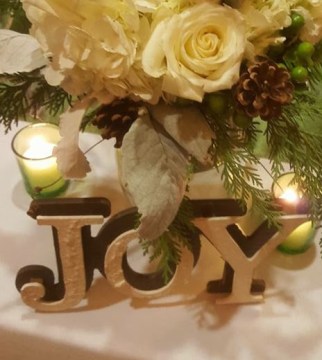
IMG_9072Erik and Chris, you wanted the message and experience of JOY to take central place in this marriage ceremony and in your married life. And I will tell you that seeing you walk up these steps hand in hand together was for me and hopefully for all of us, a moment of deep and profound joy. Trying to describe or talk about joy will always fall short of witnessing it or experiencing it. Nothing I say here will match or even come close to the look of joy on your faces this day.

But I’m a pastor and I still want to say a few words nonetheless 🙂 Joy, just like love, hope, and peace can be one of those words or sentiments that can quickly sound pollyanna-ish–too fickle and fragile, too shallow to meet or address the magnitude of pain experienced by so many. We might wonder whether it is responsible, or naive,  even selfish to seek and experience joy when so many people are despairing, when so many aren’t allowed to love who or what they love.

I agree with one spiritual writer who wrestles with this question in this way:

“I have little patience for the blind joy of those who fail to see the sufferings of the world. I am skeptical of those whose joy seems forced, happy no matter what befalls them. But there is another joy—deeper than the good times and bad times life metes out, stronger than our best attempts and sorest failings—a joy that lifts us when we cannot lift ourselves, a peace that grasps us and returns us renewed. To know the joy that comes from God is not to be carried away in blissful happiness, but to be strengthened and deepened in our love for others and for the world.” -Barbara Gerlach

In other words, the joy that the Biblical writers try to describe and the joy Jesus embodied is the kind of joy that will motivate us toward substantial change, working to make life more beautiful not just for ourselves, but for others.

Another writer puts it this way: “True joy moves us from the cramped world of self-preoccupation into a more expansive place of connection and kinship.”

Chris and Erik, you will most definitely have days of cramped self-preoccupation. Days when it is difficult to look up from your work, days when conflict will restrict you, days when you will doubt your worth or confidence, days when someone or some church will delegitimize your marriage, days when joy and happiness will fade. If and when this happens, may you dig deep and remember that you are loved in and through it all. I believe the more you can be attuned to that truth, the more love you will have to offer others.

In just a moment, we will hear a piece of music by Hans Bridger Heruth called Joy. I found a lovely description of this piece of music which I would like to share with you.

For readers you can listen to it here:  https://soundcloud.com/heruthhb/joy

“The exposition of this composition is warm and bouncy and characterizes someone that is young and full of hope and joy.

The liveliness subsides into a middle section that is hollow and ethereal, possessing a feeling of distress.

The voices echo each other’s words in a haunting ostinato while other voices sing variations of the phrase, “I am loved, I will sing,” in such a way that seems as if they are reassuring themselves of the statement.

After the climactic end of this section, the choir enters with the phrase: “I am loved, I will love”.

It’s sung in unison and is accompanied by the hopeful piano motif from the beginning of the piece. The music revvs back up into the first choral melody, yet once the piece reaches the height of this phrase, the listener can hear that our “character” now sings these melodic lines with a tinge of pain in their heart; pain, however, that they’ve overcome.

This pain is represented by drawn out melodic lines and harmonic dissonances within otherwise major chords.

As the choir begins to hum, two soprano soloists begin to sing their own line. I’d like to think that the first soloist represents the young, innocent character from the beginning, while the second soloist that joins the first represents the character’s older self who has triumphed through the hard lessons life has to offer.

The piece comes to a gentle close with the same line of: “I am loved, I will love”. It is a powerful line of text, with an even more powerful message to carry. Whether or not you agree with this sentiment, you must agree with the fact that our world is suffering, and only the power of love and the music that we share with people can heal it. We must love others, and we must share with them our hope.

And so I say to you Chris, you are loved, so love.
Eric, you are loved, so love.

To everyone here, we are loved, so for goodness sake, let’s love.


Posted in Uncategorized | 1 Comment