When a church plant dies…

peace lilyA few of us at Rainbow have been on a mission this Lent: Keep our Peace Lily plant alive. This plant was a gift given to the Bartel family in memory of Elaine. The Bartel family then gifted Rainbow with this little bit of peace. Of course, it’s hard to figure out what each plant needs in order to thrive. Are we giving this plant too much sunlight/water or too little? These are not things they teach in seminary. (Each day I ask this plant what it needs and so far I haven’t gotten a response. Where is Jesus when you need him because he seemed to be able to communicate with all living things. That IS something we were taught in seminary.)

My obsessive concern over this plant probably has something to do with the grief I’m feeling. We have had seven funerals/deaths here at Rainbow in the past year and a half. I’ve heard many people say that they are feeling spiritually dry, wishing for more Light.

In the scripture reading for this coming Sunday, Jesus talks about grains of wheat that fall to the ground and die and then bear much fruit. It’s hard to hear these words sometimes when you are in the midst of grief and loss.

Last Friday when I learned that Bernita Boyts had passed away, I took a walk through our church playground. I found myself wanting to find signs of life and I took several trips around the playground vowing to myself and perhaps God that I WAS NOT going to to leave that playground until I saw something blooming. Sure enough, on my third time around, I spotted this fragile flower which I’m told bloomed the very day Bernita died.

A flower for BernitaAnd then, a few days later I received this beautiful tribute from Bernita’s good friend and Rainbow member now living in Iowa, Anna Marie Peterson:

Bernita was a good friend.  She willingly shared her talents–one was a love of nature and knowing what to plant and where to plant. Soon after I purchased a house in 1983 at 4224 Bell St. in Kansas City, Missouri, Bernita had “ideas.”  One of her first ideas, after looking around the back yard was, “You need a tree!” A few weeks later Harold and Bernita appeared with a small oak tree, which had its growth start as a volunteer in Bernita’s flower bed.  After careful consideration the pin oak was replanted in a perfect backyard spot. Today the pin oak is one of the tallest trees on the block!  If you walk/drive by the 4224 Bell address, stop and look to the west.  Beyond the back of the house you’ll see the top of the tree I named “Friend Bernita.”  Through the years I experienced watching the tree grow and, although I’ve recently moved, I know Friend Bernita lives on for the health and enjoyment of birds and humanity. What a blessing she was for the world.

 Thinking about these words and their friendship “watered” my soul.

I will keep my eye on the Peace Lily and let’s all have an eye for one another in this time of grief and loss, offering one another friendship and light, gifts that live on and on.

Posted in Uncategorized | 2 Comments

A resting place; A remembering people

remembrance gardenThis past Saturday I had the honor of joining the Duerksen family for a committal service in the Rainbow Remembrance Garden. With Joe’s permission, I am now posting what I had prepared to share:

____________

Joe and Mary have been an integral part of Rainbow Mennonite. They have seen this place/people go through many changes,including a transition from Rainbow Boulevard to this current church location and building.

It’s probably true that it was the people and following God that mattered most to Joe and Mary, and yet location matters too. This place, this neighborhood is where we have chosen to learn to follow God together.

Today, I can’t help but think of all the locations that mattered to Mary Lou. I can’t help but think of the many types of soil and land that nurtured Mary Lou throughout her 80 plus years of life: Kansas soil (Halstead, North Newton and Kansas City), India soil, the soil/swamp of New Orleans. City land and rural land.

And now we stand here on this little plot of land, this location:

Mary Lou’s final resting place on earth.

Everyday various people will walk by: Neighborhood residents, children coming/running to and from the park, and Mennonite Voluntary Service workers (This is particularly special since Mary Lou and Joe were active supporters of the MVS unit house which we can see from this location.) There is a lot of activity in this little corner of the earth. Just listen: Basketballs dribbling, the sound of skateboards on pavement, train whistles, laughter, crying. So much life is here. And within life, there is death.

To stand here is to be reminded yet again of that truth: Death is part of life. And grief is deep. Yet, even more real than this finite life and even deeper than this sorrow is the love of God. It is this love which was the source of Mary Lou’s life. It is this love that I hope will sustain you, her cherished family.

I saw Mary Lou as a peaceful person. There’s a saying that peace comes when we realize our place in the universe and refuse to inflate it. We don’t want to deny our place either and so I hope this is a day of shining a light on the ways Mary Lou’s life reflected God’s goodness.

All of these things together (location, soil, peace) makes me think of the words found in Luke chapter 1:

God has shown the mercy promised to our ancestors, and has remembered the holy covenant…by the tender mercy of our God, the dawn from on high will break upon us, to give light to those who sit in darkness and in the shadow of death, to guide our feet in the way of peace.

____________

garden

Family members took turns sprinkling Mary Lou’s ashes in the oval-shaped “scatter garden.”

Now, cherishing memories that are forever sacred, sustained by a faith that is stronger than death, and comforted by the hope of eternal life, let us now commit Mary Lou to this earth, into God’s safekeeping.


Closing prayer from Sing the Journey:

For those who walked with us, this is a prayer.

For those who have gone ahead, this is a blessing.

For those who touched and tended us,

who lingered with us while they lived, this is a thanksgiving.

For those who journey still with us in our awareness,

in our memories and in the landscape of our dreams, this is a benediction.

_________________________

 And for those who couldn’t make it, here is what I had prepared for the memorial service: Meditation-Mary Lou

Posted in Uncategorized | 1 Comment

Putting a bib on to read the “Bib”le

This week I set out to write a blog post about reading/studying the Bible. I started it several times and pressed the delete key I don’t know how many times. It’s a tough, impossible-seeming subject after all.

joshuasmith

A photo of Joshua Smith. I’m fairly certain by his reaction that his parents are reading him a bible story as his birthday present.

Then out of the blue I thought of a picture that Rainbow member Joshua Smith posted to Facebook recently. It was his birthday and well, why not post an adorable picture like this?

My memory told me he was wearing a bib in this photo but clearly I was wrong and just this once I’ll allow shameless buzz-marketing for Lee overalls.

The reason I thought of this photo was that Joshua is someone who loves the study of scripture. Why? I don’t think HE even knows, but this is what he told the lectionary-study group that is currently meeting on Wednesday nights at the church.

Joshua, someone who plans to pursue a PhD in biblical studies, told us last Wednesday that the more he studies the Bible, the more he realizes how little he knows. That is why I will be purchasing him a bib if and when he begins those studies.

I think we all feel a little bit like a baby in need of a bib when approaching the bible. We think there MIGHT be something good and nourishing in it, but there is also a good chance we might just spit it up or worse, choke on it. The bible is hard to consume after all. Just read Numbers 21:4-9 if you don’t believe me. Or read the lectionary-assigned reading for this coming Sunday (third Sunday in Lent): John 2:13-22.

bible and moneyThere is a lot to digest when reading a text like this. Jesus is ANGRY. Why? It’s hard to know exactly, but like a lot of texts, it involves money.

And whenever I think of money and the bible I think of this story told by Kathleen Norris in her book, Amazing Grace: A Vocabulary of Faith.

Kathleen Norris recounts the story of a South Dakota rancher and his bride who received an expensive bible as a wedding gift from his grandfather. They promptly wrote a thank-you note to their grandfather and stowed the Bible away on a closet shelf. As time passed, the grandfather repeatedly asked the couple whether they liked the wedding gift. “Wasn’t a thank you gift enough?”, asked the grandson. Eventually, the grandson dug out the gift. As he leafed through it, $20 bills fluttered out, 66 in all—one at the beginning of Genesis and in each succeeding book—over thirteen hundred dollars in all.

Thirteen hundred bucks was a lot of money back then and interest could have been made on the gift.

Hmmmm….

The Wednesday night bible study starts around 6:30 pm in fellowship hall in case anyone wants to join in the fun. Bibs are optional. And you never know what riches you’ll encounter if you come! And don’t worry, I’m trained in cpr if you start to choke.

Posted in Uncategorized | 1 Comment

Crosses and crowns

For those who couldn’t make it to church this morning, I’m bringing it to you. Here is my sermon from this morning, along with some bonus photos/links.

Crosses and crowns

Genesis 17:1-7, 15-16 (the “cut out” verses are all about circumcision. Yes, bad pun.) Mark 8:31-38
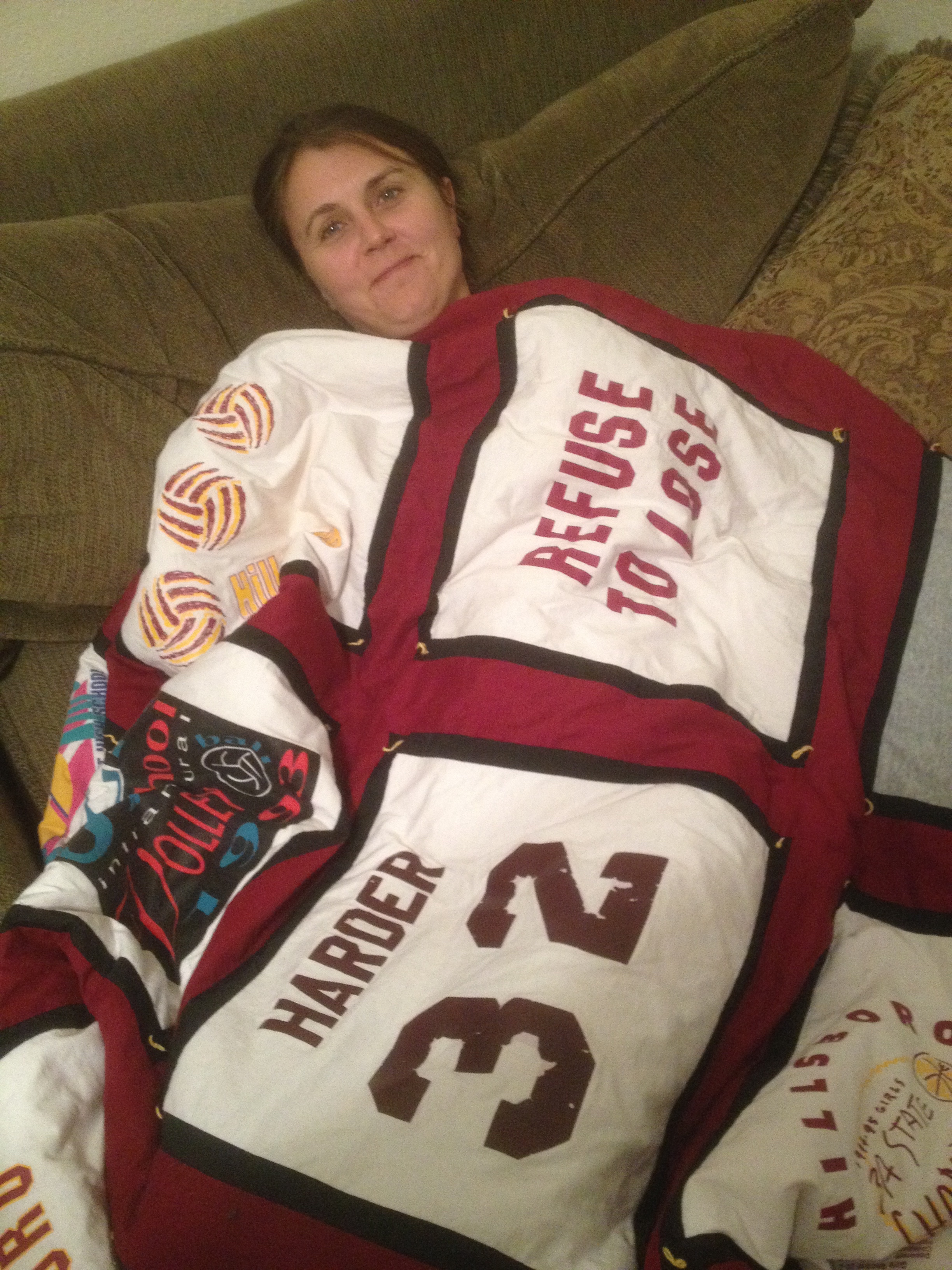
Refusetolose

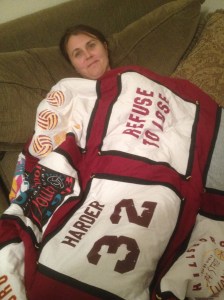
This blanket, made of all my old sports t-shirts, was gifted to me at high school graduation.

In high school I had a favorite t-shirt—on the front was a big basketball and on the back was the words “Refuse to lose.” If my memory is right, this was our basketball team mantra my junior year. We had won the state championship the year before and we were set on winning a back to back championship. We refused to lose. (And for anyone who cares, we did win back to back state champions. I have a t-shirt to prove it.)

So yeah, I didn’t like and I still don’t like to lose. We would go around saying, “Winning isn’t the only thing…it’s EVERYTHING.”

Unfortunately in college I didn’t achieve the same level of success.

Also around that time I started spending less time thinking about sports and gave more attention to my coursework, particularly my Bible courses. I remember being so captivated, maybe a little disturbed by this passage in Mark where Jesus invites everyone to be part of what sounds like a losing mission. Deny yourself; Pick up the cross, not a crown. I actually did a research project on this text in college and spent a whole semester interviewing as many people as I could, asking a variety of people what they made of this call from Jesus. My main take away from that project was that people’s responses were often different depending on their gender, race, country of origin, age, etc.

Personally, I’m drawn to Peter in this passage, and his reaction to Jesus. You can’t blame him for not liking the prospect of losing. He, like many in his time, had certain expectations of Jesus. Jesus was thought to be the long-awaited Messiah who was to deliver them from Roman oppression. Generation after generation of people had waited and hoped for this Messiah. Finally the promise of a worldly crown, victory was within reach.

That is precisely when Jesus began to teach them that he was about to undergo great suffering. Yes, there would be a crown, but not the kind they expected. Jesus was about to experience the ultimate rejection and loss. So outraged is Peter that he rebukes Jesus and Peter is rebuked in return.

“Get behind me Satan, “ Jesus says. In other words, Jesus tells Peter that he has been deceived. Peter has misunderstood. Jesus was not clamoring after a worldly crown. Rather, Jesus was set out to transform the principalities and powers of this world that led to violence and destruction. This would result in a clash of epic proportions; it would result on Jesus’ death on a cross.

For first century Palestinians, the cross meant one thing: death, a tortuous death. I read this week that the Romans would put up crosses like billboards as a way to establish Caesar’s supremacy. People were told that the cross awaited anyone who threatened Caesar’s kingdom.

Now it’s one thing for Jesus to choose to defy Caesar and all that Caesar represented. But in this passage Jesus turns to the crowd and tells them that anyone who wants to become a follower or disciple must first deny himself or herself and take up the cross. What an invitation then and now?!

Mark’s community was probably a persecuted community so for them, this was sort of a “have faithful endurance pump up speech.” Jesus was encouraging them to be courageous in the face of persecution.

It’s a little tougher to know what relevance a passage like this has today for those of us who don’t necessarily feel persecuted on a daily basis. There are Christians around the world who do feel persecuted but most of us can’t relate to this kind of persecution and threat to our life and security as a result of our faith.

And yet, I don’t want to let myself off the hook too quickly and assume that there isn’t anything here for us to ponder in our context.

So what do we do with this call to deny ourselves, to pick up the cross and follow Jesus?

Here I want to share a little bit of my own personal struggle, a struggle that I know isn’t shared by everyone, but in sharing perhaps it will inspire your own reflection on what this call has meant to you. When I was in seminary and in the years following seminary I started to develop higher and higher ideals for myself and for the church. I began to understand Jesus as this revolutionary figure, this prophet who tore Caesar, who tears every tyrant from his throne. I saw Jesus as confronting all that was greedy, corrupt, oppressive in this world and offering an alternative path for those who would be willing to follow, a path that included sacrifice, hard work (HARDERS LOVE TO WORK HARD), humility and courage. I desparately wanted to sign on to this vision. I still want this vision of Jesus to guide me and us.

After a time though, following Jesus began to feel  like an impossible ideal. I recognized my own limits, as well as those of others. Besides, sacrifice is not very fun, neither is losing oneself. In fact, in certain circumstances denying oneself can be wounding and destructive. It was a time of wilderness for me.

I was one seminary student among many who was wondering what self-love means in the Christian paradigm. Many of us students, especially women asked: What does it mean to joyfully serve others, not just out of gendered obligation? And what does grace mean? We often spent time talking about whether we could follow Jesus and remain healthy. Can we hope without guilt to stay alive while following Jesus?

Sarah Thompson, a woman a few years younger than me and who now serves as the Christian Peacemaker Team Director put it this way in 2004: “Good Mennonites are not self-serving. They keep their daily struggles in the United States in perspective to the wars, famines and massacres around the world.”

Sarah, like many of us, grew up with these messages:

Live simply that others may simply live; Forgive others with grace but scrutinize your own actions; Put others first, yourself last; Do not be gluttonous. Purity, purity, purity; Work harder to get close to God; Let your faith be visible. Sacrifice.

Sarah was so fixed on this vision and unfortunately, somehow in the process she developed an eating disorder. She literally purged herself in order to be perfect.

She writes this:

I felt justice and peace were so important that I would risk all for their sake, even though I knew I would be no good to the cause if I were sick. As I maintained leadership in the antiwar movement at my school, no one could tell me I wasn’t doing all I could to live an alternative, anti-greed lifestyle. Even as I got weaker, I saw my eating disorder as physical evidence of my triumph over the greedy forces in the world. But it wasn’t a triumph. I couldn’t ignore the toll my self-discipline was taking on my body.

Eventually Sarah’s friends and her pastor helped her see how  rigid her faith had become and how faith can often get distorted in times of isolation and crisis. She started identifying what she calls her “thinking errors,” both in her relationship with food and with God.

“I asked myself,” she wrote, “what is important in life, and I studied how Jesus took care of himself. Learning to understand Mennonite tenets in moderation, I reclaimed myself as a
beautiful creation of God and declared my efforts as a peacemaker to be a witness to the love and benevolence of a higher power.”

She continued:

Removing the pressure of the outcome of world situations from my shoulders to God, I stopped purging to be perfect. I am learning to respond to people’s questions about contradictions with a grace that comes from God. I am reminded of the necessity of celebration in spiritual disciplines. I don’t know what my sacrifices will be in the future, but I have gained the tools to sacrifice in a way that is life-giving.

Sacrifice in life-giving ways. That is a phrase that I want to keep in my vocabulary. And I want to believe that Jesus would support this search for life-giving sacrifices. After all, Jesus told those who would listen that he would rise after three days. Sacrifice was part of the call, not the end game. Life, resurrected life, resurrected living, was the end game. That is the victory worth sacrificing for.

Finally, here is a quote I shared before communion by Paul Shupe:

The season of Lent he writes, is structured to help us remember the journey of Jesus to the cross. It is also a time for us to articulate again the call of discipleship. In these forty days we contemplate not only the wonderful power of the cross of Christ, but the power inherent in taking up our own crosses too. Opportunities are daily before us, times when we may give our lives sacrificially to acts of love, compassion, justice, and peace, even in the face of the same imperial forces of sin and death that confronted Jesus. In this season, we are wise to ponder, not only the cross, but the picture of Jesus on the road to Jerusalem, calling all his disciples to take up our own crosses and to walk with him in paths of love and service.

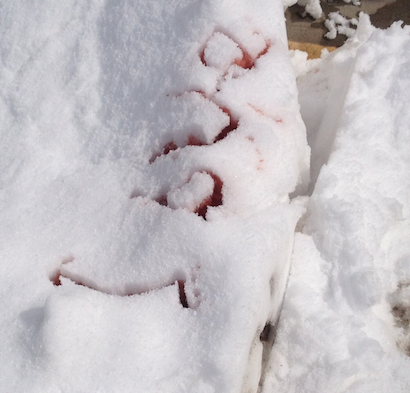
After worship I asked the WorshipArts class where we should pour the leftover communion juice. Someone thought of the parking lot since we hoped everyone would have a safe trip home. So we headed outside and spelled the word love near all the cars.

love


Posted in Uncategorized | 2 Comments

A shared vision, community, and legacy

We will soon dedicate the newly remodeled Lucille Larson Youth Education Center, or the “Upper Room,” as we are starting to call it. The upper room is described in Acts 1:12-14 as a place where Jesus gathered his disciples (men and women) for rest, renewal and prayer. Meals were also shared in this upper room (Mark 14:15 and Luke 22:12).

This is our vision for our own Rainbow Upper Room: a place for youth to gather, play, rest, share food, and learn about Jesus.

IMG_3444IMG_3443This week I tried to imagine young Lucille Larson, born in 1925. Did Lucille spend time in this space learning about Jesus from her Methodist teachers and parents? If so, I wonder which stories and experiences inspired her to become who she was, someone who cared deeply for the nurture of young lives?

We will have a chance to learn more about Lucille Larson and her family this coming Sunday as we seek to be good stewards of her sense of mission. The plan is this:

Towards the end of worship we will join in a litany of dedication. Then people will have an opportunity to go upstairs to see the rooms. A slideshow of the project will be available in Fellowship Hall for those who don’t make it upstairs. At noon we will gather in Fellowship Hall for some storytelling and a potluck meal. We expect to have a large group of Larson family members joining us, so please bring plenty of food to share!

larson print 5x7 purpleSpecial thanks to Jesse Graber for this sketch of Lucille.

Look for the framed tribute on Sunday!

Posted in Uncategorized | 2 Comments

Lent: Please move slowly and use caution

IMG_3327More and more publishers and writers are including Trigger warnings” atop literature dealing with topics such as abuse, rape, violence and suicide. BBC news (see link above) describes these warnings as so: “Trigger warnings usually takes the form of a sentence or a few words to caution readers about the content which will follow. The author adds a warning in recognition of strong writing or images which could unsettle those with mental health difficulties. They exist so readers can choose whether or not to read any further.”

Sometimes I wonder if we shouldn’t include a trigger warning at the front of our Bibles or at least in front of certain stories, or seasons such as Lent. I mention Lent because during these next 40 days, we will consider words and stories from the Bible that quite frankly, might make us squirm: Sin, sacrifice, crucifixion, blood, suffering, serpents (read Numbers 21:4-9 if you REALLY want to squirm). Even the word or concept of salvation might make some of us squirm, especially if and when it is defined too narrowly.

That is why I’m suggesting that we move slowly through Lent, using caution. This notion of moving cautiously through Lent came to me while walking through (and sometimes INTO) the glass labyrinth at the Nelson-Atkins Museum of Art.

IMG_3332My husband loved the experience of walking through this labyrinth. I on the other hand felt claustrophobic, queasy, and dizzy. It didn’t help that I kept bonking my nose and head on the glass. (Given all the nose smudges on the glass, I was not the only one!)

Similarly, I fully expect that we will hear and experience different emotions and reactions during this upcoming season of Lent. And I fully expect us to bonk our noses and heads (figuratively speaking I hope). Hopefully here and there we will also glimpse the deep, everlasting, eternal Love of God, even if through a glass dimly/smudged (1 Corinthians 13:12). Click the link below to read more about Lent at Rainbow.

Lenten Insert2015

Finally, all are invited to an Ash Wednesday Taize Service tomorrow night (February 18) from 5:30-6:15 pm. We will try not to bonk heads as we bow our heads or hold our our hands to receive ashes, an ancient symbol of our mortality, and our being in God’s care in our living, dying and rising. Special thanks to Renee and the senior high youth who safely set fire to the dried palm branches used in last year’s Palm Sunday service. Don’t worry, the ashes will be cooled off in time for our Ash Wednesday service.


Posted in Uncategorized | Leave a comment

Epiphany has flown by!

I began January/Epiphany with the story of Jesus’ baptism on my mind. How, I wondered, would I describe this dramatic story of the heavens opening and a spirit descending on Jesus like a dove to children? That’s when the idea of a peace crane came to mind. I decided that during the next five Sundays (the season after Epiphany) I would place a peace crane somewhere at the front of the sanctuary. The weeks have flown by (pun intended), and the crane has made the rounds. (It was actually kidnapped one week. You WILL be brought to justice.) I have enjoyed watching people look for the crane, or to quote the very witty Christian Buller, I have enjoyed watching people “crane their necks.”

I wonder where it will be THIS Sunday?

Actually, this week the crane might be hard(er) to find. That is because there will be about 1,000 cranes on the chancel this Sunday! These cranes, which many of you have helped make, will soon take flight and find a new home at the Peace Monument in Hiroshima Japan.  More about this project will be shared on Sunday.

IMG_1737And just for fun, look at these dollar bill cranes that Alison Bush made! I trust that they eventually found their way to the Rainbow offering plate 🙂

Posted in Uncategorized | 2 Comments

Reflections on healing

musicalreflections

Here are the reflections on healing shared on Sunday, February 8:

And here is a description of the service by Joshua Smith:

It was a really good service. The scripture was Mark 1:29-39, and the whole service was oriented around healing. The hymns were beautiful, the sermon(s) were deeply personal, and the whole service just allowed the congregation to stew in the complexity of human frailty. Pastor Ruth talked about the need for peace to calm our demons, and Bob (a former hospital chaplain) reflected on the fact that he is getting older, and what it means to profess faith in a Healer while having a body that is itself failing. Best worship service I’ve been to in a long time.

Posted in Uncategorized | 3 Comments

Our Great Physician(s)

This coming Sunday at Rainbow we will consider a healing narrative found in the gospel of Mark (Mark 1:29-39). Bob Carlson has agreed to come alongside me and offer some reflections on healing.

What I would really like to do is have all of our medical professionals offer a scriptural reflection on healing. Of course if we did that we might be here all day because there are probably over 20 health professionals in this congregation. I’m told that the original location of Rainbow Mennonite Church (Rainbow Boulevard) was chosen in large part due to its close proximity to KU Medical Center. This makes sense given that from the very start of this congregation, about two thirds of the congregation was made up of medical students and professionals.

IMG_1690Joe Duerksen (pictured to the right) is one of the many great physicians at Rainbow who has cared for countless lives throughout his long and admirable career. He practiced medicine with integrity while simultaneously trusting in and praying to the Great Physician, a name given to Jesus. Click here for more information about Joe:  Joe D.

Whether you are a medical health professional or not, most of us will step foot into a health care setting at some point in our life, whether to visit someone or as the one visited.

I’ve actually been going through old pastor files left behind by Robert, Frank, Ron, Gary, Clyde and who knows who else? One file that caught my attention was by Frank: The art of hospital visitation I like how straight forward and simple it is. For example, under the heading YOUR PURPOSE it says, “Have one.” And please no ganging up and NO SMOKING! Frank must have been skilled at hospital visitation because my husband Jesse and his parents have fond memories of Frank’s presence when Jesse had back surgery at KU Med Center as an adolescent.

I began compiling my thoughts on hospital visitation while serving as a hospital chaplain. Years later I edited it after asking a room full of retirees what it was like to be visited while receiving medical care. Click here to read their list:  Do and do not-Hospital Visitation

My own mantra when visiting people in the hospital is fairly simple: Stop, look and listen. I also try and think about what puts me at ease when I am hurting or vulnerable. It is key to stay aware of one’s own preferences and know that these preferences may or may not be shared by others. It’s oh so easy to project our preferences or our care language onto another person and make them uncomfortable as a result.

Another thing I’ve been taught is to avoid yes or no questions. Maybe you can find a time to use one of these questions: Who or what do you turn to for support? What do you lack that you wish you had? What are you most worried about? What do you anticipate or hope? What do you think your life will be like in 5 years?

One more thing to say is that sometimes the most caring thing to do is stay home (especially if the sight of blood makes you stop, drop and roll).

At one point or another we will probably end up on or beside a hospital bed. Let’s hope we all receive and give caring support from those around us. And may we continue to hope that our Great Physician is with us in it all.


Posted in Uncategorized | Leave a comment

Anabaptism(s)

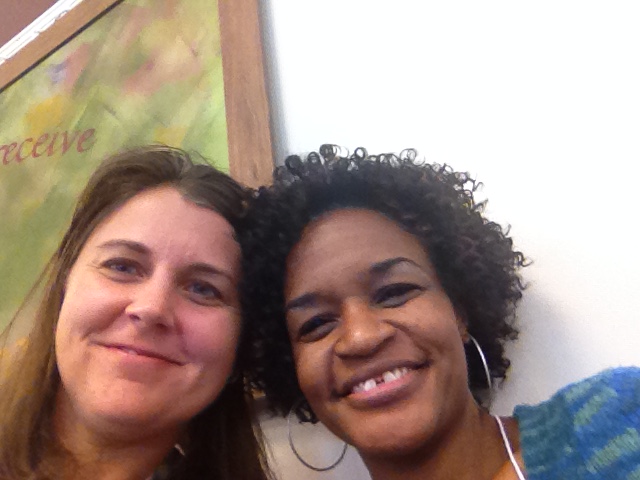
This is Cyneatha Millsaps. We got acquainted as seminary students. During a class assignment we realized that we were neighbors the first six years of my life. Now we are both Mennonite pastors.

This is Cyneatha Millsaps. We got acquainted as seminary students. During a class assignment we realized that we were neighbors the first six years of my life. Now we are both Mennonite pastors.

Today I write from the library at Anabaptist Mennonite Biblical Seminary in Elkhart, IN. I am here with fellow pastors, theologians, professors, students and denominational leaders trying to define an Anabaptist Christian. It turns out this is not altogether possible because there are many Anabaptist movements springing up all over the place, each with their own uniqueness. One could say there has never even been such a thing as An Anabaptist. From the very beginning in the 16th century, Anabaptism has never been a monolith. The same could be said about the Mennonite Church, which of course traces its roots to the 16th century Anabaptist movement(s). MCUSA is not a monolith. MC Canada isn’t either.

th

Drew Hart

As theologian Drew Hart said this morning, there are different convictions and centers within each of these movements and expressions of Anabaptism. When pressed to be a little more specific, Hart highlighted the importance of discipleship (following Jesus) and community. He, being the social activist that he is, said that another dimension of Anabaptism that has been there from the very start is a “minority mentality.” Early Anabaptists critiqued social orders that were oppressive and that put people into harmful hierarchical categories.

Of course now many Mennonites living in North America don’t necessarily have this “minority mentality” and instead are often part of dominant culture. Has this new found privilege caused some of us to turn our backs to the most vulnerable? Have some Mennonites turned away from Jesus’ ministry of proclaiming “good news to the poor, to proclaim freedom for the prisoners and recovery of sight for the blind, to set the oppressed free”? (Luke 4:18) And will we recover once again what many 16th Anabaptists recovered? That is, will Mennonites follow Jesus in life, participating in his ministry to those oppressed, believing Jesus to be present with us in this work?

Notice that in defining Anabaptism Hart does not focus on potlucks, or four-part harmony singing, or certain foods, or certain names or family lineage. Not that these things are bad in and of themselves, but let’s not forget that the heart of Anabaptism traces back further than the 16th century and all the way to the heart and life and death and resurrection of Jesus and the ministry that Jesus seemed to put his heart into. Are we, he asked, willing to join this Jesus in questioning systems of domination and privilege today? And as others have asked this week, will we wrap our work in prayer, asking that the Holy Spirit inspire us to be such a Jesus-shaped people? Will we pray and work toward becoming people who are willing to put our time, resources and talents toward building a more just social order? If so, maybe we are one of the many Anabaptists today.

I hope this is a conversation we can continue to have at Rainbow. How do we define our Mennonite/Anabaptist identity? And using Hart’s definition, would people look at Rainbow and see these Anabaptist convictions at work?

I encourage people to get familiarized with Drew Hart’s reflections by reading his blog found here.

Finally, a picture of two more Mennonites/Anabaptists.

Sophie Lapp (left) was a recent Mennonite Voluntary Service worker and Abby Banning (right) grew up at Rainbow. They are both living in Goshen, IN. I met them at Goshen College Mennonite Church during a lecture by Greg Boyd.

Posted in Uncategorized | 1 Comment