Opening a channel

“Are any among you suffering? They should pray. Are any cheerful? They should sing songs of praise. Are any among you sick? They should call for the elders of the church and have them pray over them, anointing them with oil in the name of the Lord.” -James 5:13-14

IMG_1914This jar of anointing oil sometimes sits behind the Rainbow pulpit, sometimes in my car, and sometimes in the Rainbow pastor’s office. It was gifted to me by a good friend after I anointed her and her stillborn son in a time of anguished, sorrowful prayer I won’t soon forget. That time together and this jar continues to be a gift that keeps on giving. Not only have I anointed others using this jar of oil, when I’m feeling particularly anxious or sad, I dab a little of the lavender scented oil on the palm of my hand. I don’t know why exactly, although I can relate to a Rainbow member who recently said that for her, anointing with oil, “opens a channel.” Beautiful.

The Church of the Brethren folks know a thing or two about the power of anointing, having kept that biblical tradition alive in so many beautiful ways. In the Church of the Brethren Minister’s Manual, anointing is described as a ritual that helps us consider the interdependence of the mind, soul and body. It is written: “Certain possibilities for health open up when a biblical teaching and healing rite with historical roots are lived out in a congregational setting…Anointing with oil for healing is a means of God’s grace and blessing intended to bring restoration and wholeness.”

I share this because I plan to have this jar of lavender oil with me at the Rainbow Longest Night/Winter Solstice Service on Thursday, December 21. During the time of candle lighting, when people will be invited to come forward to light candles, I will stand off to the side and offer a dab of oil on the palm for those who long to “open a channel” toward greater wholeness. (Olive oil is so often used in anointing because the olive branch has long symbolized reconciliation and wholeness.)

Anointing of course is not the only way one can open a channel to God. Acts of charity and hospitality, singing, silent contemplation, studying scripture—these all can be described as channel openers.

The anointing words I will share tomorrow night are simple: “May the God of hope fill us with all joy and peace, so that we may abound in hope by the power of the Holy Spirit.” In other words, my prayer is that as we seek to open channels to God, we will become channels of God’s mercy and compassion in the world.

I end this post with one of many blessings that will be shared during the Longest Night Service at 7 pm on Thursday. Hope you can join us.

Blessing for a Whole Heart by Jan Richardson

You think
if you could just
imagine it,
that would be a beginning;
that if you could envision
what it would look like,
that would be a step
toward a heart
made whole.

This blessing
is for when
you cannot imagine.
This is for when
it is difficult to dream
of what could lie beyond
the fracture, the rupture,
the cleaving through which
has come a life
you do not recognize
as your own.

When all that inhabits you
feels foreign,
your heart made strange
and beating a broken
and unfamiliar cadence,
let there come
a word of solace,
a voice that speaks
into the shattering,

reminding you
that who you are
is here,
every shard
somehow holding
the whole of you
that you cannot see
but is taking shape
even now,
piece joining to piece
in an ancient,
remembered rhythm

that bears you
not toward restoration,
not toward return—
as if you could somehow
become unchanged—
but steadily deeper
into the heart of the one
who has already dreamed you
complete.

 

Posted in Uncategorized | Leave a comment

Singly none

This gallery contains 4 photos.

Originally posted on over and around the rainbow:
This post was originally published in November of 2016. Today I re-post it in honor of Pablo who died unexpectedly this week. Many will remember him for his jovial, mischievous spirit and…

More Galleries | 1 Comment

Holy Smokes

Ten years ago, as a recent seminary graduate, I thought I knew the Christmas story frontward and backward. I did not, it turns out, know how to share this story of Jesus’ blessed birth without almost burning the church down.

To be fair, who knew oranges were flammable?

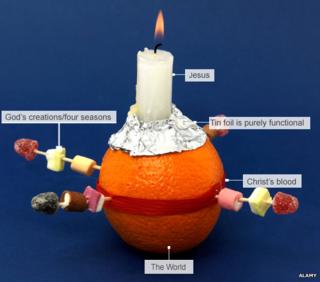
Surely you’ve heard of Christingles by now. No? The best description I’ve found is as follows: “Children are given this weird orange-based thing, then there is or is not a fire-related incident, and then Silent Night is sung.”

_79228904_christinglelabelled_alamy_6

Somehow 10 years ago, in my novel-is-always-good leadership days, I thought a weird orange-based thing out of Moravia sounded wonderful! It sure beat having to force children into sheep, shepherd and magi costumes. (I’m a daughter of a drama professor, so I have PTSD, also known as Parent in Theater Stress Disorder.)

It was going to be perfect. People could come to the church early, make their Christingles, the church would smell like citrus, and the children could process in with their lit oranges.

MG_0206-e1354270311965

What could possibly go wrong?

It turns out, everything. We weren’t even half way through the opening hymn, “O come, all ye faithful,” when I heard the first pop and crackle. Sure enough, the candles had already burned down, the flame had caught the paper wrapped around the base of the candle (TERRIBLE IDEA), and one by one all 50 oranges began to go up in flames. I panicked as any good leader should not do in that situation.

Lucky for me, the high school son of the fire chief was my co-worship leader that evening. (If seminary didn’t convince me of Divine Providence, I became acquainted with him that night.) Over the next five minutes, Joe repeatedly walked up to the communion table to put out the fires one by one. I don’t even remember how he did it; all I know is that Joe turned into Jesus incarnate for me that night. He literally saved Christmas, one flaming orange at a time.

Fast forward 10 years and I find myself sticking incense into oranges (much safer!) as I nervously prepare for another Advent season. There are so many disasters and near-disasters unfolding, sometimes right in front of us, in our very homes and lives. Today’s fires of sexual abuse and harassment, racism, discrimination, economic inequalities, sexism, and the degradation of nature are too much to bear at times, and Joe, I mean Jesus, is nowhere to be found, or so it seems. I continue to wonder how we might share this story of Jesus’ blessed birth meaningfully in the presence of so much real and metaphorical fire, ash and smoke.

The hope I still cling to is that Jesus came into this world and showed the world what God’s love incarnate is and could yet be in the midst of all disasters, whether natural or human made or both. That is what I will think on as we join in singing “O come, all ye faithful” this year and hopefully NOT this hymn written in honor of  fools like me.


Christingle hymn from Ship of fools.com


See the advent candles, standing in a ring

What a pretty sight; they show us Christmas is coming


Lucky Lucy gets to strike a match upon the box,

All at once its head cones off and sets fire to her socks


See the flames lead upwards! Lucy goes berserk

We bring a fire extinguished, oh dear! it does not work


Everyone is shouting, rushing to and fro

Pretty soon the church becomes a total inferno


See the bishop blazing! listen to the choir

They can sing much louder now, that they are on fire


The fire brigade are coming now, down the street they dash

What a pity nothing’s left except for lots of ash


But what a jolly time we had, watching smoke and flame

It was so much fun that we must come to church again.

Posted in Uncategorized | 1 Comment

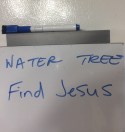
Water tree, find Jesus

To do listIt’s that time of year again—time to lose baby Jesus. It happens every year. We set up the crèche complete with Mary, Joseph, baby Jesus, angels and shepherds, and usually within 24 hours poor baby Jesus goes missing. With no children in the house and two feline, I think we know who the culprit is. Yes, Pepper, we are on to you!

Thankfully we haven’t ever lost baby Jesus completely. We usually find him, put him back in his rightful place, put Pepper in time out, and within 24 hours Jesus is gone again. This hide and seek ritual continues throughout Advent and Christmas.

Last year as we were preparing for a group of church members to come over, I searched the entire house for baby Jesus, but Pepper outsmarted me. Some people noticed the missing Jesus and figured there was some theological reason for waiting until Christmas to put Jesus in his manger. I confessed that I wasn’t that sophisticated and that really, the cat burglar in the house was to blame for Jesus missing.

One of our seven-year-old house guests, who I didn’t even know was listening in on our conversation, piped up and said matter-of-factly, “Maybe Jesus will come back at Easter.” Now it’s not just cats, but seven-year-olds outsmarting me.

Today as I set up the crèche, carefully placing Jesus in his rightful place, it’s tempting to want to glue him down. I might still do that, and yet, as much as we may want Jesus securely in the center of our lives and nativity scenes, it’s never that simple. I wake up many mornings and sometimes in the middle of the night, wondering where Jesus is. Often loss, hatred, illness, suffering, abuse and violence are like thieves, robbing us of the gifts Jesus embodied and still offers. So yes, I want a here-to- stay Jesus, but as seven-year-old Arri reminds us, even the Biblical story doesn’t have Jesus glued down, what with the resurrection and all. Jesus is often found in strange, unlikely and miraculous places. Here, there and everywhere, and yet sometimes hard to find and never to be confined.

Now if we could just figure out a way to keep Pepper in his rightful place.

This wouldn’t be complete without some shameless buzz marketing (and Christmas present ask): Introducing the purrrrrrfect gift—A Cat Lover’s Nativity from Ten Thousand Villages!

https://www.tenthousandvillages.com/cat-lover-s-nativity

Posted in Uncategorized | Leave a comment

A Thanksgiving letter

Frank's Tree - Copy

Fall greetings and Happy Thanksgiving from Rainbow!

It has become my annual November tradition to connect by letter to the extended Rainbow community. Rainbow exists today because of the many people near and far, past and present, who give generously of prayers and resources. Thank you for being part of the Rainbow that stretches across many geographies and decades.

There is much to be grateful for in this time of changing seasons. Here are just a few of the highlights from this past year at Rainbow.

  • The once vacant lot at the corner of Southwest Boulevard and Mill Street is now an orchard full of trees and bushes of all varieties—blackberries, jujubes, peaches, Asian pears and more!
  • A Rainbow Butterfly Garden was planted on the east end of Whitmore Playground
  • Under the Executive Director leadership of Ashton Wells, Sharing Community in Rosedale, Inc. is committed and poised to begin offering year-long youth educational opportunities in the Rosedale community, with the six-week summer program held at Rainbow Mennonite Church remaining a top priority. We continue to be grateful for this historic and vibrant collaboration between church and
    community.
  • Personnel changes have included welcoming a new full-time Church Administrator, Carrie Parsons. Carrie and her spouse Ken and two children first started attending Rainbow in 2008. This year we also increased Renee Reimer’s hours and changed her job title to Youth and Outreach Ministries Director. Rosi Penner Kaufman continues in her role as Music Ministries Director and Terry Rouse is our
    dedicated half time Maintenance Coordinator.
  • This year we also marked the following 40th anniversaries: 1) Rainbow’s involvement with Mennonite Voluntary Service (MVS); 2) Whitmore Playground; 3) The formation of Sharing Community in Rosedale, Inc. Thanks to a Vital Worship Grant Rainbow received from Calvin Institute of Christian worship, we had a big outdoor celebration in Whitmore Playground in June which we affectionately
    called “Whitmore Jubilee.” And in terms of MVS, after a year sabbatical, we hope to be up and running again as an MVS site in August 2018.
  • 16 people from Rainbow attended MCUSA Convention in Orlando, FL: 7 sr high youth (including 1 who served as a youth step-up delegate), 3 sponsors, 2 adult delegates, and 4 attendees/volunteers. 10 jr high youth volunteered around the church and at several local organizations for a service-inspired week at the end of July. 7 jr high youth made the trek out to Colorado in January to spend a long weekend worshiping and interacting with other youth at Snow Camp held at Rocky Mountain Mennonite Camp.
  • A new communion table and prayer bowl table were commissioned and built
  • Twenty-two members of the Rainbow Choir joined with over sixty singers from UMKC in a performance of Dona Nobis Pacem, a major choral work by Ralph Vaughn-Williams. This event was part of the opening of a Muted Voices Symposium at the WWI Museum.
  • Thanks to a grant we received from Schowalter Foundation, after the Muted Voices symposium Rainbow hosted a traveling exhibit called Voices of Conscience: Peace Witness in the Great War, built by Kauffman Museum. This exhibit lifts up the prophetic insights and the personal courage of World War I peace protesters, and suggests parallels to the culture of war and violence in our world today.
  • Last but not least, on November 19 we marked our 60th year anniversary as a congregation. Charter Day was November 24, 1957, at which time 42 individuals became members. We’re fortunate to have a few charter members still active at Rainbow!

No year passes without difficulties. Violence and abuse continues to affect and sometimes destroy people’s lives, catastrophes and disasters happen at an alarming rate, we mourn the deaths of loved ones and Christians continue to fight over what it means to follow Jesus. And so as we move into this new year, we hope to set some new Rainbow goals—goals that will help us live out our mission with greater intention and courage: To maintain a fellowship of all who profess faith and a desire to follow the Gospel of Jesus Christ, regardless of race, ethnic identity,gender, sexual orientation, age, economic or other life circumstances, and who will strengthen and express our faith by corporate
worship, study and teaching of the gospel, and who will seek to serve the spiritual and material needs of this and the larger community.

Hopefully some of you receive our weekly midweek email describing current events and happenings. Or perhaps you follow the Rainbow Facebook page or utilize our church website for audio recordings of Sunday services, or maybe you have made use of the online giving feature.

From all of us at Rainbow, may the year ahead be full of hope, joy, peace and love.

Ruth Harder, Pastor

Posted in Uncategorized | 1 Comment

Sixty years and counting

82C8A444-6A04-495E-A255-3464A35CD28E

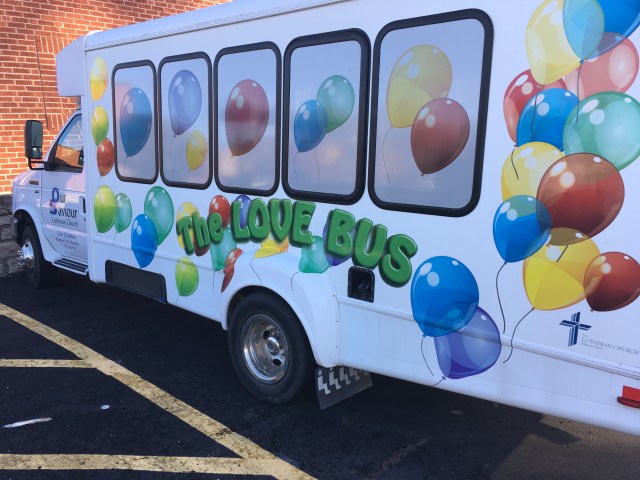
Bring out the rainbow cake and party bus! We will celebrate our church’s 60th anniversary this coming Sunday, November 19. And in case you are worried, no, we didn’t purchase this LOVE BUS pictured above as an anniversary present. We will, however, have a chance to ride in it this coming Sunday. Our Saviour Lutheran Church on Rainbow Boulevard heard about our anniversary prayer walk plans and offered shuttle services free of charge.

So for those who wish to have an early start to your Sunday, join us for a 40 minute, 2 mile, 4,600 step, 230 calorie burn Rainbow anniversary prayer walk. We will convene at our current church parking lot at 7:45 am SHARP, take a LOVE BUS shuttle to the first church building at 40th and Rainbow and walk the 2.04 miles back. (You can also just meet us at 40th and Rainbow at 8 am if you prefer.)

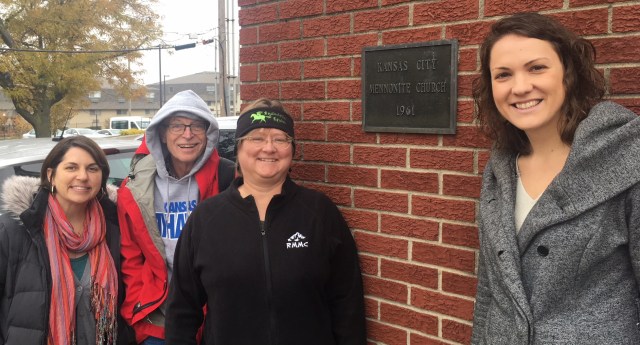
Rainbow church staff did a practice walk on Tuesday and didn’t even break a sweat.

146D93D6-9B21-416A-AC40-2865DFEA019E

Notice a plaque is still there that says Kansas City Mennonite Church.

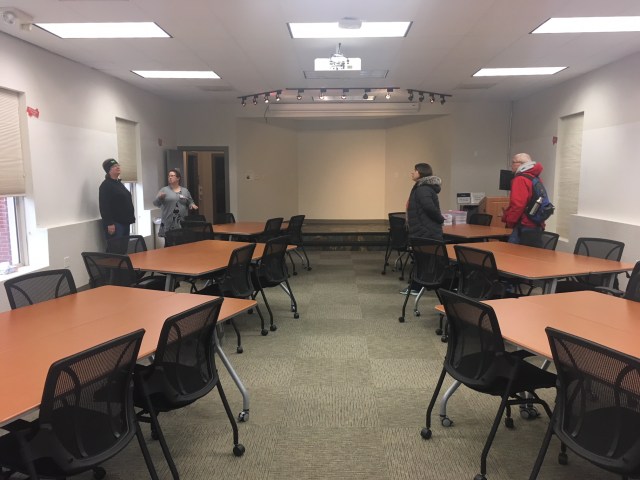
We even got a tour of the church building!

C7BAE57D-E3D6-41D3-BB26-5D18C1FFE425

It proves to be a wonderful morning–an anniversary slideshow, a skit written by former Rainbow pastor, Frank Ward, and an anniversary noon potluck. You can read more about our 60 year history here : Rainbow history

photo(3)

In 1957 this building on 40th and Rainbow officially became Kansas City Mennonite Church. The Church moved their worship services to Southwest Boulevard (our current location) in 1969.


Posted in Uncategorized | Leave a comment

Building a Peace Resume Together

“Everyone’s a pacifist between wars. It’s like being a vegetarian between meals.”

-Colman McCarthy, journalist, pacifist and peace activist

This coming Sunday evening at Rainbow (November 5 from 6-8 pm), we will hold a multi-age conversation on conscientious objection (CO) and pacifism in the 21st century. Our youth group members and leaders hope a variety of people of all ages, genders and backgrounds attend—so consider this your invitation!

We will hear a variety of stories and perspectives, including a reflection on how one can identify as a CO when applying for US citizenship. During a potluck meal we will discuss some of the common critiques of conscientious objection and pacifism, and then after supper we will look at the nuts and bolts of registering for the draft including how one can begin identifying oneself as a conscientious objector. I stress begin because CO status will not be officially recognized or denied unless a draft is reinstated.

Organizations like the Center on Conscience and War advise people, especially young people who wish to identify as COs, to begin building a CO resume complete with a comprehensive statement of one’s pacifist beliefs, documentation of activities that help to support that claim and letters of support. If and when a draft begins, this resume will help prove to a draft board a consistency and longevity of pacifist beliefs.

And herein lies a challenge and invitation, especially in a day and age when we don’t have a military draft.  What does it mean to begin building a peace file or resume? What are we doing today to support our pacifist beliefs? As the quote above articulates, it’s easy to identify oneself as a CO or pacifist in theory or on paper, just as it is easy to be a vegetarian between meals, but what does it look like in practice, especially when faced with oppression or cruelty, or life and death situations?

VolfMiroslav Volf writes in his book, Exclusion and Embrace, that we live in a world whose order too often rests on or depends on violence. He urges those who seek to follow the Prince of Peace to find alternatives to the sword, for too often, “the sword intended to root out violence ends up fostering it.” However, for nonviolence to be effective, Volf says it must be part of a larger strategy of combating systems of terror. Nonviolence can become barren, he writes, if it shies away from injustice and oppression.

In other words, those who seek to follow the Prince of Peace are called to find alternatives to the sword not only in word, but in deed. The good news is that it’s never too late to begin, or begin again this work of building a peace resume.

Do we as Mennonites have this figured out? Hardly! That is why gatherings like the one we are holding on Sunday seem important. Let’s find our way together, ever aware of our own missteps, inching our way closer to Jesus’ active, non-violent way of peace.

peace love and potlucks

Peace, love and potlucks! Let’s be sure and include options of the vegetarian variety!

More resources for those who are interested:


Posted in Uncategorized | Leave a comment

See you at the museum!

As a pastor serving in a historic peace church denomination, I never thought a) I’d have a church-related meeting in a War Museum conference room, b) that I would sign a check made out to the National World War I Museum from Rainbow Mennonite Church, and c) that the church choir would be invited to sing a peace anthem at the museum.

IMG_5387

Representing Mennonite Church USA, Quakers, Church of the Brethren, and Community of Christ

What could possibly lead us to such action? For close to two years, I have worked alongside leaders from Quaker, Church of the Brethren, and Community of Christ backgrounds to prepare for the Muted Voices Symposium, happening this coming weekend (October 19-21) at the WWI Museum.  This symposium, marking the 100th year anniversary of U.S. entrance into WWI, will remember the muted voices of conscience, dissent, resistance, and civil liberties in WWI through today. The full program can be found on line here.

No worries if you can’t make it to the symposium. Recordings of certain lectures and presentations will be available in the future, and Rainbow will host an exhibit that will premiere at the museum and then travel to Rainbow the week of October 22.  For more information about the symposium and traveling exhibit, click here to read my editorial published in the KC Star on October 18.

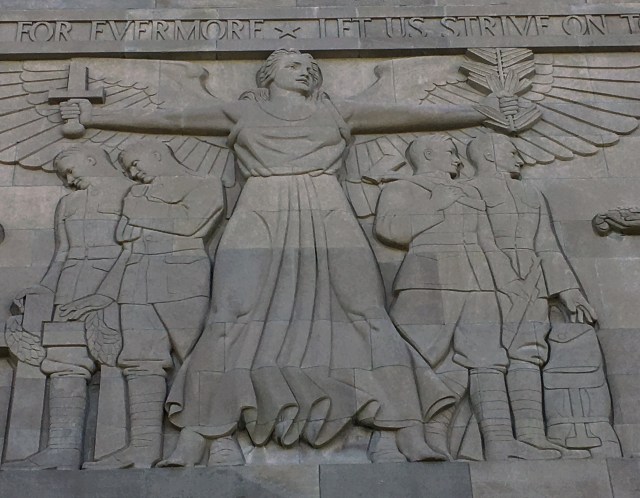
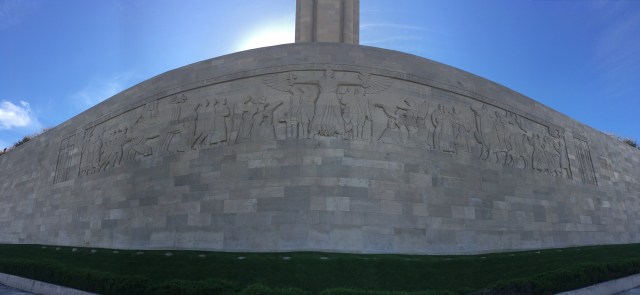
Whether or not you attend events at the museum, I hope at some point everyone has a chance to reflect on the museum’s exterior north wall. There you will find The Great Frieze, a 148 feet by 18 feet carved stone frieze that depicts humanity’s movement from war to peace, which is never a linear journey.

15FC95B5-59B7-416F-833B-AC45110A0F68

The vignettes from left to right begin with the four horsemen of the apocalypse that represent the death and destruction of war, patriotism is represented next, with the following scene representing the wounded who are guided by a nurse.  In the center of the frieze is Liberty, symbol of peace and understanding. She is flanked by soldiers putting down the implements of war and picking up the instruments of peace. To the right of Liberty are the words, “Let us strive on to do all which may achieve and cherish a just and lasting peace among ourselves and with all nations.” Micah 6:8 is also quoted.

32AFBF49-44A7-47D7-BD0D-FAE56FFAA878

You might also take note of the two Assyrian Spinxes that guard the south entrance of the lawn. Both are shielding their eyes from the horrors of war. Memory faces east toward the battlefields of Europe and Future faces West to the unknown, feared future of bloodshed.

One last note: On Sunday morning, October 22, from 8-8:30 am, a public Memorial Ceremony will take place at the Museum remembering the WWI conscientious objectors on all sides, offering up a special remembrance for the two Hutterites and the seven Mennonite CO’s who died at Fort Leavenworth, KS. A Hutterite choir of 47 young people will sing two songs. Additionally, a Hutterian brick will be installed in the Walk of Honor Non-military section near the front entrance of the museum. Join us if you can.

3DA502D0-944F-424E-84B5-5A3C42B519F6

Posted in Uncategorized | 1 Comment

Speaking of monuments

There has been a lot of talk lately about monuments. Leroy Seat from Rainbow has written a piece called Monumental Decisions, and Sojourners published a great piece here: Where are the Monuments to Peacemakers?

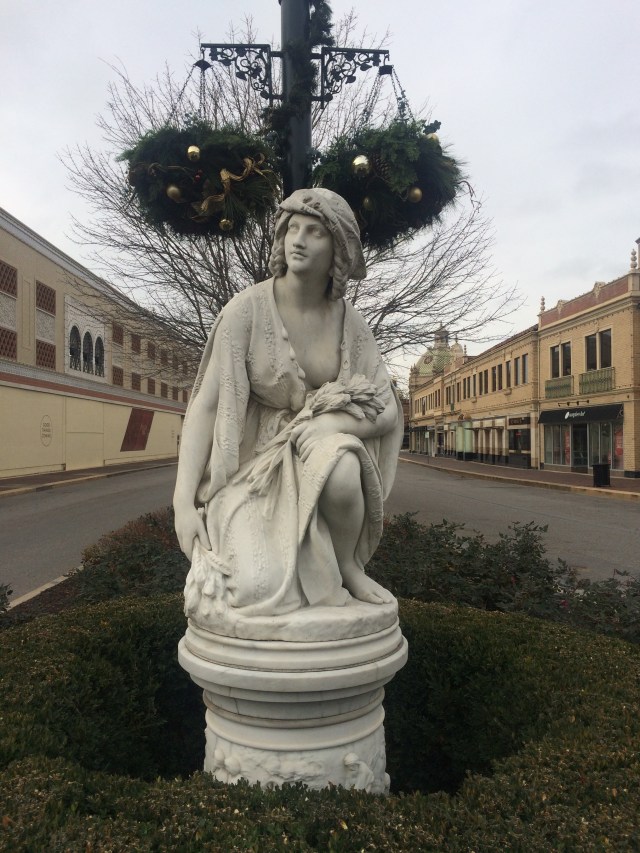
This national discussion has led me to pay more attention to the monuments around KC. In particular, I am interested in the Biblical Ruth sculpture that sits in the median on the west side of the intersection of Nichols and Wyandotte, what is known as the KC Plaza.

I love this description: “She [Ruth] is kneeling on her right knee and holding sheaves of wheat while she gazes off to her right.  The center panel of the base, which is sometimes obscured by the surrounding landscaping, is a bas relief depicting the story of Ruth from the Bible. “

Ruth

This sculpture is an original work by Pasquale Romanelli of Florence, Italy. It was purchased by Miller Nichols from Romanelli Studios for placement on Country Club Plaza in 1966.

The story of Biblical Ruth is indeed obscured, not just sometimes, but most of the time I’m afraid. Too often we turn the book of Ruth into a romantic fairy tale, with a man swooping into rescue the vulnerable, passive, submissive women. Too often we forget that the story of Ruth begins by describing the humanitarian crisis that is famine. An Israelite family must flee Bethlehem, which in Hebrew means “House of Bread,” to a foreign land called Moab in order to survive. Ruth of course was a Moabite woman who eventually marries into this Hebrew family. Crisis after crisis piles up and eventually Ruth and her mother-in-law Naomi have to flee once again, this time back to Bethlehem. Desperation and perhaps literal hunger drives the widow Ruth to glean in the fields, as widows, which means “the leftover piece,” were allowed to do by Mosaic Law.

As Joan Chittister reminds us, Ruth was written thousands of years ago—anywhere from 500 to 1000 B.C.E.—composed, faith tells us, under the inspiration of the Divine, it [Ruth] is a universal story of the poor, the marginalized and the refugee. It is a story, she argues, of hope emerging out of loss and tragedy, a story about risk, vulnerability, marginalization, barrenness, hostility, change, transformation, relationship, survival, resiliency.  “We are all,” she writes, “Naomi on the way from the grave, all Orpah on the way to security, all Ruth on the way to a strange tomorrow.”

Sure, the story ends (spoiler alert!) on a more pleasant note. Naomi, a name that means “pleasant,” is restored and her bitter (Mara) tears are replaced by tears of joy at the birth of her grandson, Obed. (Obed would then father Jesse, who would father David. All of this means that Jesus’ lineage is traced back to Ruth, the Moabite and foreigner.)

What I take away from Ruth is a radical story of foreigners despised and then welcomed, of enemies becoming friends and kin, a story that explores the realities of scarcity, famine, emptiness, barrenness as well as friendship, abundance, and hesed, that wonderfully rich Hebrew word, which often is translated as loving kindness, but really sums up the way God intends for human beings to live together. It is, as Carolyn Custis James writes that “bone deep commitment that motivates a person to love voluntarily with nothing expected in return.” The story of Ruth is soaked in hesed, she writes. With Ruth’s blood running in Jesus’ veins, no wonder his followers still to this day believe he fully embodied hesed. No wonder Jesus often talked about welcoming the foreigner, the widow, the hungry and sorrowful.

I understand that the Plaza includes many statues and murals depicting many of the world’s great leaders and historical figures. When Plaza developer Jesse Clyde (J.C.) Nichols traveled through Europe in the 1920’s, he wanted to bring some of Spain back with him. It’s wonderful to see the Biblical Ruth be given prominence. But what kind of great leader and historical figure do we see when we look at Ruth? How have we obscured the more radical vision of hesed that Ruth gives us? We will explore this question and more on Saturday, September 30 from 9-11 am.  Join us for coffee and, while this might further obscure our study, maybe I’ll bring some Baby Ruth bars for us to enjoy.

Posted in Uncategorized | 1 Comment

Shapers of Conscience

I remember the moment like it was yesterday. I am a nine year old standing in the lunch line at school. I can hear the lunch lady asking my peers in front of me if they want white milk or chocolate milk. Unlike my friends, I didn’t see myself as having a choice between white or chocolate because in my family, chocolate milk was a no-no. Too sweet, my parents told me. It would inevitably lead to cavities. So for years, even though I felt jealous of my peers as they slurped down their chocolate milk, I remained obedient—it was always white milk for me.

Then, just like that, it all changed. For reasons I can’t explain, it dawned on me that day that my parents weren’t standing in line with me. How could they possibly know if I chose white or chocolate? I felt this rush of adrenaline that comes with new-found freedom, independence and maybe a little bit of rebellion.

IMG_3078

As it turned out, I ended up not liking the chocolate milk. It was, in fact, too sweet. (Don’t tell my parents they were right.) I also realized that while my parents weren’t there to punish me, they were still shaping my conscience and guiding my actions from a distance, or they were at least trying to.

I’ve thought a lot about this lunch room memory this summer as I started to prepare for this new worship series we are calling “Voices of Conscience.”*

voices of conscience

Precisely what is a conscience? Does everybody have one and if so, are we born with one? Is conscience fixed or malleable? Is it always trustworthy? How are our consciences influenced by the attitudes and values of our culture? And finally, is there such a thing as a Jesus-shaped conscience? Or a Mennonite conscience?

No matter what our answers are to these questions, I believe developing a healthy conscience or moral compass requires a lot of maintenance. Our conscience is not always reliable or infallible. I tend to agree with others that while we should always listen for what our inner conscience tells us when it comes to discerning what is right or wrong, we should not blindly follow our conscience. Rather, real moral growth and maturity lies in examining our conscience, evaluating its promptings, purging it of negative influences and error.

Peter W. Marty writes this in a recent article in Christian Century called Conscience means knowing together:

The word conscience, from the Latin conscientia, is formed of two words, meaning “knowing together.” That’s a clue that it’s best to think of conscience not as an inner voice but as the ability to think and act with outside help. Parents, teachers, and coaches all contribute to the shape of our conscience. So do formative events. So does God. God in Christ Jesus helps form followers into particular kinds of human beings.

Forming a conscience shaped by the moral compass that was Jesus is what I hope we will consider in the weeks to come at Rainbow.

As Peter W. Marty reminds us, the stakes are a lot higher than whether to choose white or chocolate milk. “It’s time to start renewing our own conscience by asking the right questions,” Marty writes.

“As Martin Luther King Jr. famously put it: “Cowardice asks the question, is it safe? Expediency asks the question, is it politic? Vanity asks the question, is it popular? But conscience asks the question, is it right?” We have the work of conscience cut out for us in America.”

Yes we do.

*Voices of Conscience is the name of a traveling exhibit that is being developed by the Kauffman Museum, Bethel College, KS. It will premier at the Muted Voices Symposium October 19-22 at the National WWI Museum in KC. Rainbow Mennonite Church will be the first exhibition stop on a year-long exhibition tour around the U.S.  This exhibit will remember the witness of peace-minded people against the First World War, 1914-1918. The exhibit will lift up the prophetic insights and the personal courage of WWI peace protesters suggesting parallels to the culture of war and violence in our world today.

Posted in Uncategorized | Leave a comment