Art in/as Sacred Space

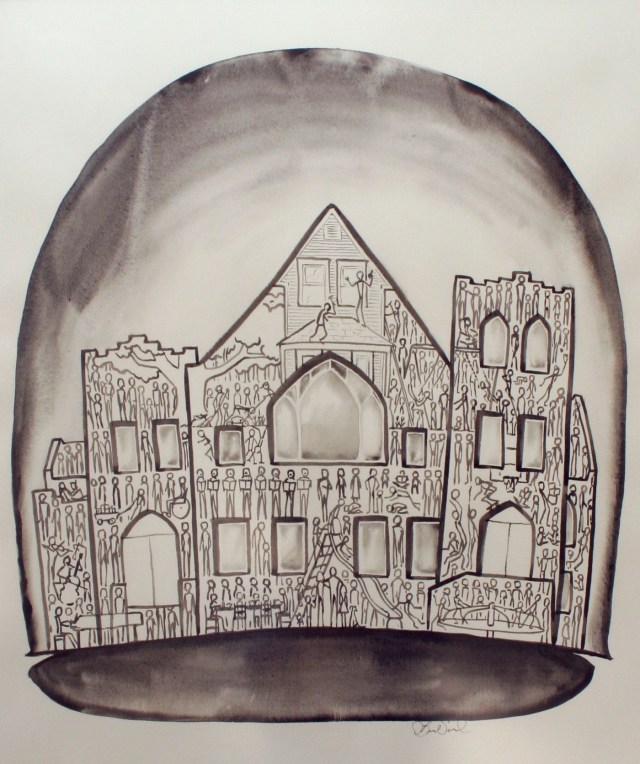
Today I wish to give a special shout out to those who have worked so diligently on the Art in Our Sacred Spaces book that catalogs our current art collection at Rainbow.

FrntPage

We will celebrate and dedicate this book and project this coming Sunday, April 30 at 4 pm. So if you want to learn more about the art at Rainbow (both indoors and outdoors), join us! A powerpoint presentation of this tour will also be shown in Fellowship Hall for those who choose to stay in one place for this “walking tour.”

What follows is the introduction that I wrote for this book.

I spend a lot of time contemplating the beauty of the spoken and written word. And yet it is often while walking around our church building and grounds that I feel an extra sense of awe and wonder. That’s the gift of beautiful images—they often draw us to God, the source of all beauty, in ways the written and spoken word falls short.

That being said, Mennonites have at times been squeamish about visual arts in sacred space. Some have taken the Biblical prohibition against making graven images to mean that visual images are at best a distraction for Christians. Mennonite artist Bob Regier offers this helpful historical perspective on this subject of art in sacred space:

“There is a rich symbol tradition in the Christian church, reaching back to the early church and coming into full flower in the Gothic and Renaissance periods of the 12th through the 15th centuries. The Protestant Reformation interrupted this flowering. The reaction to the excesses, the opulence, and the misuse of power within the church swept away the rich visual traditions of painting and sculpture that were so completely integrated into the architecture and liturgy of the church. Indeed, there were excesses that needed abandonment or correction. But in retrospect we now see that this might have been another example of throwing out the baby with the bath water. In our own Mennonite tradition, especially, the primacy of the spoken word and healthy suspicion of embellishment swept aside any visual elaboration within our worship spaces. The visual symbol was suspect. While the visual arts in the church all but disappeared, with a few notable exceptions such as Jan Lluyken’s illustrations for The Martyr’s Mirror, music remained as a powerful non-verbal medium of expression. Slowly, the power of color, shape, texture, and line has returned to take its place alongside music and the spoken word. We are no longer afraid to allow all of our senses to be engaged in the worship experience.”

This is certainly true at Rainbow, a place that is alive with art of all kinds!

And so whether you join us on Sunday or not, here is an art-full prayer for us to consider written by John Johansen-Berg.

Divine Creator, your works delight us with sight, scent, and sound, bringing sensations of joy to all living creatures. We ask your blessing on all those whose creativity gives a reflection of your handiwork in the universe. Give inspiration to those whose use of paint and texture harmonizes colors and shapes with subtle interpretation; may they bring an extra dimension into the minds of those who view their art with pleasure.
We give thanks for those who work and mould the clay,
chisel and shape the stone and iron, carve and smooth the wood,
to make exquisite sculptures
which delight the heart and mind.
Heavenly Artist,
bless the painters, sculptors
whose creative gifts are a source of blessing for others.
Sneed Commitment to Community

Illustration near east staircase by Brad Sneed called “Commitment To Community”

Posted in Uncategorized | Leave a comment

Easter shenanigans

As a young girl I remember overhearing a church visitor say that you can always spot a pastor in a room because they the ones who don’t look like are having any fun. I probably remember this so well because my dad happened to be the not-having-fun-pastor this visitor was talking about. Now I’m the pastor who is well aware of the occupational hazard of taking myself, my work, and life too seriously. Perhaps that is why I sometimes ask worship leaders to bring a joke to share with me before worship begins. My favorite one so far is this: “Ruth, how do priests make holy water?” Answer: “They boil the hell out of it.”

In a growing number of Christian churches, the Sunday after Easter is a time to tell jokes in church and play practical jokes on the pastor, probably because in general, pastors could probably lighten up a bit. Maybe we could all lighten up a bit at times. And what better time to do that than the Sunday after Easter, after God played the most epic joke of all on death?
IMG_7392

Therefore this coming Sunday we at Rainbow will be joining the ranks of Christians who will observe Holy Humor Sunday, or Laughter Sunday, or Holy Hilarity Sunday. The witty Mike Horner will bring the teaching called “Grocery Gospel,” there will be a time of sharing bulletin bloopers, and the organ will be joined by the kazoo (or the other way around). Meanwhile, the pastor will be out of town this weekend creating some of her own post-Easter shenanigans—details of which you will never know.

As we prepare for Sunday, consider these affirmations of humor compiled by Rev. Chris Anderson:

A Communion of Saints
Affirmation of Humor

Ecclesiastes:
“there is a time to weep and a time to laugh.”

Chrysostom:
“laughter has been implanted in our souls.”

Aquinas: There is a time for
“playful deeds and jokes.”

Luther:
“You have as much laughter as you have faith.”

Calvin:
“we are nowhere forbidden to laugh.”

Francis De Sales:
“humor is a foundation for reconciliation.”

Wesley:
“A sour religion is the devil’s religion.”

Kierkegaard:
“Humor is intrinsic to Christianity.”

Dostoevsky:
“If a person laughs well they are a good person.”

Chesterton:
“A good joke is the closest thing we have to divine revelation.”

Bonhoeffer:
“Ultimate seriousness is not without a dose of humor.”

Fulton Sheen:
“The only time laughter is wicked is when it is turned against he who gave it.”

Flannery O’Conner:
“Christianity is a strangely cheery religion.”

Elton Trueblood:
“Never trust a theologian without a sense of humor.”

Charles Schultz:
“Humor is proof that everything is going to be alright with God nevertheless.”

Krister Stendhal:
“humor, along with irony, forms a safeguard against idolatry.”

Eric Gritsch:
“Humor is thus anchored in a self-knowledge that indicates one’s limitations.”

Posted in Uncategorized | Leave a comment

Towel and basin

Then Jesus poured water into a basin and began to wash the disciples’ feet and to wipe them with the towel that was tied around him.

-John 13:5

Foot washing can be a peculiar and awkward ritual to reenact in modern times, especially since most of us in this country don’t travel by foot in sandals through deserts, mountain sides, and along seashores like Jesus and his followers did. When we want people to look at or pay attention to our feet, most of us (if we can afford it) pay a podiatrist or massage therapist.

I had all but given up on 21st century foot washing rituals when I found myself volunteering a week at the Open Door Community in Atlanta, Georgia. Every so often, local medical students in the fields of acupuncture and podiatry would come to the shelter and offer free pedicures and massages to the homeless gathered on Ponce Ave. It was both painful and beautiful to watch these young , aspiring medical students hold in their hands the feet of homeless people as they treated ingrown nails, blisters, bunions and all manner of foot problems.  The stench, the bloody toes, the hollers, the chaos, the long line, the tears, and words of thank you felt like a living gospel moment. It was by far one of the most  poignant modern-day  “foot washing” ceremonies that I’ve ever participated in.

Final-Foot-Clinic-@-Open-Door-Community-049-3

The Open Door Community, as sad as it makes me, is no longer providing hospitality and foot care to the homeless people of Atlanta. In their letter announcing this decision, the founders of Open Door said this about their decision:

“When we moved into the old home on Ponce de Leon, the neighborhood was a place where many poor people — both housed and homeless — lived. We served food and hospitality to folks from personal care homes and from the streets. For many years we provided 10-12,000 meals each month, serving seven days a week. We provided showers and clean clothes for hundreds. We added two free medical clinics and a foot clinic. But now the neighborhood has changed drastically as a result of concerted public policy, escalating property values and police work geared to “moving the homeless on.” The personal care homes for the mentally ill are now offices and single family dwellings; the railroad tracks where many homeless folks camped have been transformed into the Beltline. The men seeking work at the “catch out corner” have, in large part, been moved out by police and security guards. Our area is fully gentrified and it has become an inhospitable space for the homeless poor. We serve meals to fewer people, and even our holiday meals that typically served 500, now serve only 300 or so. We anticipate that shortly there will be very few of the homeless poor in this area of the city.”

The people I met at Open Door will certainly be on my mind as I prepare the basin full of water for our foot washing ritual tonight at Rainbow. So will the many people in our world who lack clean water and a place to lay their head. Refugees the world over walk and walk and walk, with no home in sight and those of us with more resources so often think we can “move the homeless/refugee on.” But where do they go? Who will stoop to wash their feet?

Open+Door+Community+Logo

Tonight we will begin our foot washing ritual by singing a hymn called “Here to the house of God we come” with text by Shirley Erena Murray. The music setting, by Colin Alexander Gibson, is named after a Cambodian refugee camp KHAO I DANG. Whether people participate in this ritual or not (it’s optional), I hope the symbols of towel and basin will be an opportunity to consider again the cries of the human family, and how we might yet share lodging with free hand, “space in our living, in our land.”

Here to the house of God we come,
 home of the people of the Way,
 here to give thanks for all we have,
 naming our needs for every day,
 we who have roof and rent and bread,
sure of a place to rest our head.

There is a knocking at our door,
 sound of the homeless of the world,
voice of the frightened refugee,
 cry of the children in the cold,
asking the least that is their right,
 safety and shelter for the night.

God who is shelter, who is home,
 in borrowed rooms you came to live,
 pleaded to save the dispossessed,
 crucified, lay in borrowed grave:
 these are no strangers in your eyes,
 this is your family which cries.

We are all tenants of your love;
 gather us round a common fire,
 warm us in company with Christ, 
give us the heart to feel, to share
 table and lodging with free hand,
 space in our living, in our land.

Posted in Uncategorized | Leave a comment

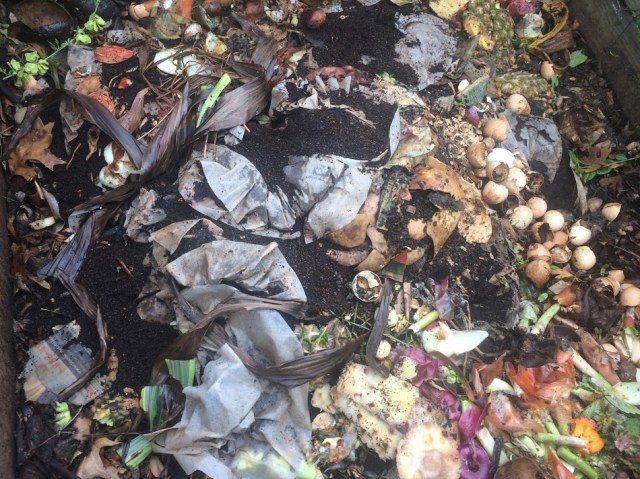
A church that composts together re-members together

It was all about compost this morning at Rainbow. Special thanks to Sallie Page-Goertz and Madeline Bollinger for composting our prayer bowl prayers this morning as the children watched intently.

And special thanks to Kimberly Hunter and Bob Campbell for their beautiful Lenten reflections on compost and on being rooted and grounded.

Reflection by Kimberly: April.2_Rainbow_Matthew.Compost

Reflection by Bob: Volunteers

Finally, I want to thank everyone who has donated their “waste” to make our Rainbow compost pile the beautiful masterpiece that it is! As Kimberly and Bob urged us, let’s keep learning together about humus, humility, humor, and what it means to be human made in the image of God. And let’s watch and wait for God through nature to teach us about resilience, resurrection, and re-membering.

IMG_5945

Posted in Uncategorized | Leave a comment

Measuring our stride as Christians

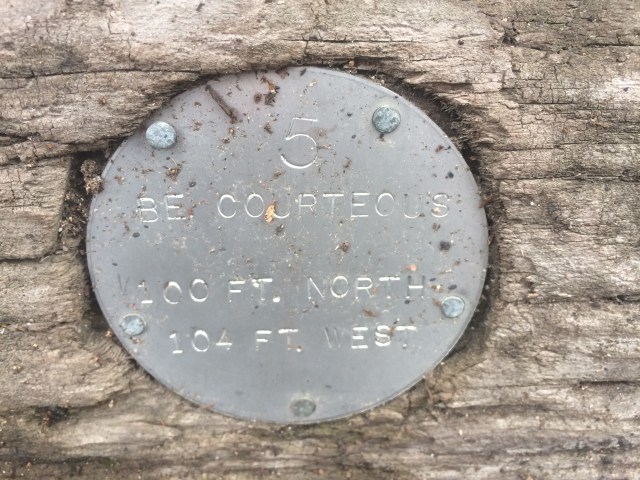
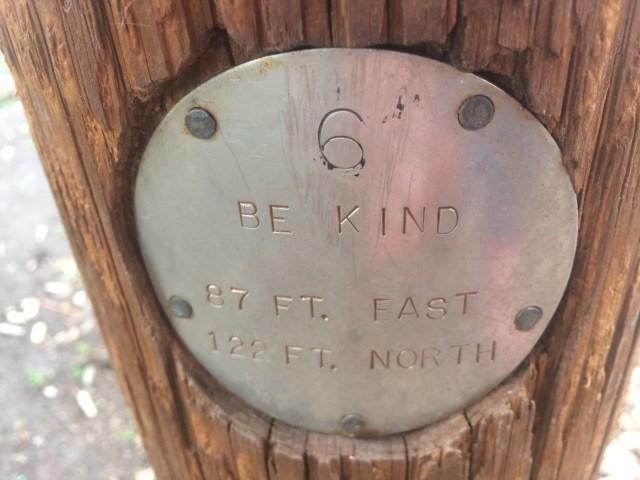
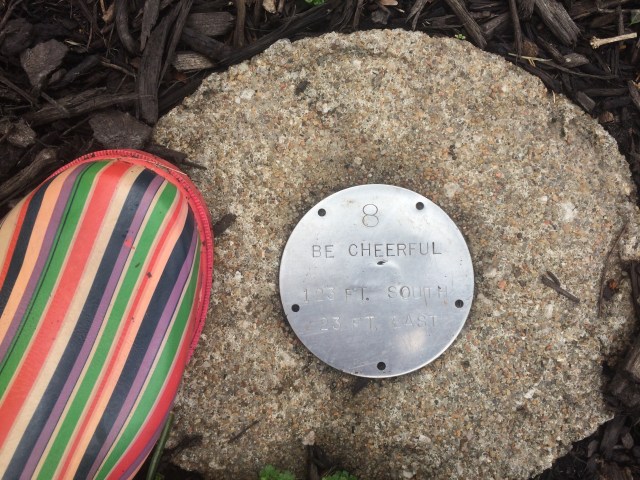
Terry, Rosi, Renee, Ashton, Gatspy (Ashton’s puppy), and I spent our Tuesday staff meeting  buzzing around and “measuring our stride” in Whitmore Playground. This was Ashton’s last staff meeting as Church Administrator, so we thought it would be fun to do something out of the ordinary. And since we have been hearing a lot about the beatitudes the last two Sundays at Rainbow, we thought it would be fun to walk “The Be Trail” in Whitmore Playground. I highly recommend trying this compass course, especially with people who are good at following (and knowing their) directions.

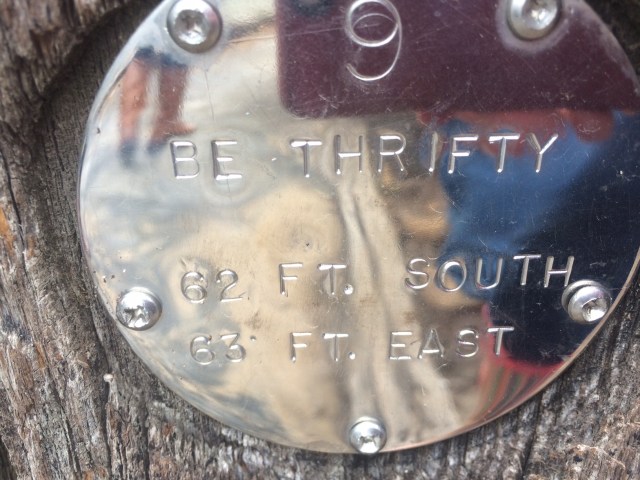
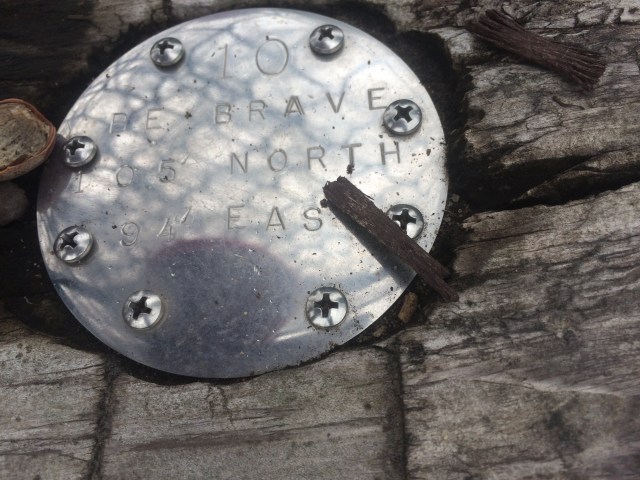
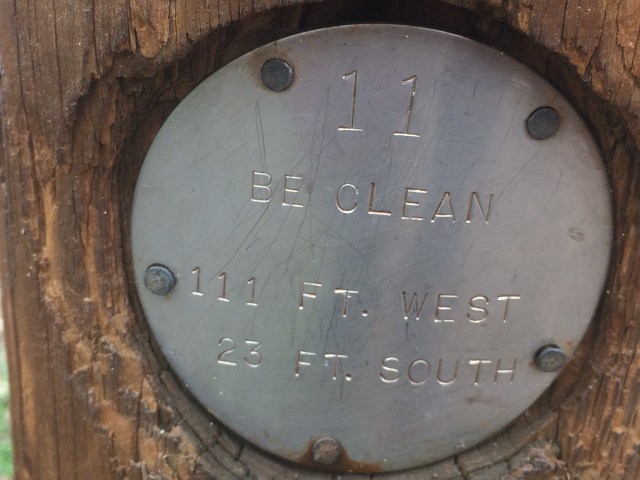
“The Be Trail” was designed in 1993 by David Kaufman, with sculpture and design help from Arlie Regier. This Boy Scout project was intended to be a compass course designed, in David’s words, “to gives kids something to do and at the same time teaches them directions and how to measure their stride.” The course is called the “Be Trail” and uses the theme of a bumble bee. Throughout the park there are twelve stainless steel plates. Each plate gives the direction needed to locate the next plate and includes one of the scout laws (be trustworthy, be loyal, be helpful, be friendly, be courteous, be kind, obedient, be cheerful, be thrifty, be brave, be clean, and be reverent).

At the start of the trail there is a sculpture of a bumble bee made by Arlie Regier. In front of the sculpture is a round piece of stainless steel on the ground that tells the walker to check his/her directions and stride. It also tells the direction and how far it is to the first metal plate.

Perhaps one of these days we’ll create a devotional guide to go along with the walk. What sort of compass course does Jesus provide us? How do Jesus’ teachings impact the measure and quality of our stride/walk? What questions or reflections do we have about being trustworthy, loyal, helpful, friendly, courteous, kind, obedient, cheerful, thrifty, brave, clean, and reverent?

IMG_5931IMG_5910IMG_5911FullSizeRender(2)IMG_5913IMG_5914IMG_5918FullSizeRender(3)IMG_5922IMG_5923IMG_5927IMG_5928

We all have a chance to learn more about Whitmore Playground this coming Sunday. Plan to stay for playground pictures and storytelling in the Sanctuary following worship.

Posted in Uncategorized | 1 Comment

Remembering Adisa

I am the vine, you are the branches. Those who abide in me and I in them bear much fruit, because apart from me you can do nothing. –John 15.5

It’s been one year since I received news that my good friend’s full-term pregnancy had ended in stillbirth. The news came as stark as the days that would follow. First, came a request for prayers, and next came the devastating news: “Adisa Baraka didn’t make it.” Then came the concern that my friend had lost a dangerous amount blood during the delivery. More prayers were requested.

Adisa Baraka, names that mean, “The clear one or foresight” and “blessing,” had not made it. Now we worried that his mother would experience the same fate. Nothing about this seemed clear or blessed. All we could do was be the best circle of friends we could be—and even that felt dreadfully inadequate and full of potential missteps.

I watched as friends and family from near and far gathered around, forming a womb-like environment for my friend, helping her to begin the process of physical and emotional mending—mending that continues to this day. We showered her with food and drinks, plants, candles, oils, and gifts of all kinds. We went on walks, wrote poems, and sat in silence together, wiping the tears from our eyes. And we planted a red Japanese Maple tree together in honor of Adisa Baraka Osayande-Taylor.

It is this tree that beckoned me on a recent Sunday evening. I was at the church figuring out what to do with the leftover communion juice from the morning service. It is my custom to pour out the leftovers somewhere outside as a practice of extending the table into the world, and returning the gifts back to creation from whence they came. As soon as I saw the chalices full of leftover communion juice on my desk, I knew immediately where I would go–Adisa’s tree.

IMG_5776This property where we planted Adisa’s tree will soon become an orchard-planting site. We hope that fruits of all kinds will grow over the next decade, with Adisa’s tree in the middle, and with the fruit ending up in the mouths of neighborhood/area children who come to our church for summer educational programming. And so as I poured the leftover juice around the base of the tree, I thought of Jesus, The Great Vine, The Blessed, Clear One, who promises that we are not alone, and that fruit can be found and grown, even in the face of devastating loss. We are called to be stewards of this blessing and promise.

And so with the little juice I had left, I walked around the soon-to-be-orchard, and with tears sprinkled in with the juice I prayed: Fruit of the womb, fruit of the earth, receive this offering, and bless all who will tend and receive from this fertile land past, present, and future.

Posted in Uncategorized | 1 Comment

A Reflection on Dust

2017-lent-movieA Reflection on Dust by Sharon McCulley:
Dust gives us much to think about as we begin Lent, an introspective
time on our calendar. It is not easy to take stock of ourselves, as there is
much to distract us. When we finally eek out moments of quiet and
stillness to take in our reflection, we may become distracted by our own
image and not be able to recognize our deeper essence in this world.

For many, glimpses of our deeper selves come when pondering in
those dark and deep nights how we began and how we will end. It is a point
filled with desperate questions. We want to understand how and when and
what and where. I am convinced fragments of the answers to these
abstract questions lie in dust. It is through both scientific inquiry and our
grasping faith that we try to put meaning into our flecks of perpetually
decaying dust, wanting not to be forgotten, wanting to matter.

But, we have forgotten we are matter. We are dust. By that fact
alone, we can trace our lineage to a vast and powerful universe. Eternity
exists within our mortal form. We contain eons. Stardust that is millions of
years old flows in our veins. We are important, because we are forever
connected. We will not be forgotten, because we literally cannot be
destroyed. Our recycled ash and dust will forever come together to form
new histories, new stories, new experiences.

And what of our own experience in this moment? This very second?
Indeed, we are so very small in the scheme of time, we take up the most
miniscule fraction of space when you think about what surrounds us. We
are tiny beings, on a tiny planet, in a tiny portion of all that is. We are
mortal, our end will come, and our ashes will scatter. We need to
acknowledge how temporary we are as beings bound into dust, and how
little we control before we try to navigate our world. Contemplating the
fragility of dust reminds us that we are not permanent and allows a release
of ego that can poison even the most well-intentioned.

If you have not already noticed, I just said we are eternal and mortal.
We are forever and temporary. We are big and small. We matter a lot and
we don’t matter at all. This is the paradox of dust- our dust. This cosmic
awareness helps frame discussions as we reach into the core of our being
and attempt to recognize our collective selves.

The Lenten tradition of becoming empty in order to be filled helps us
reach into and explore our own piles of personal dust we are leasing from
the macrocosm. There are many ways we can practice this emptying.
Fasting and giving something up are common physical metaphors for the
internal change we hope to embody. However, if we merely take this time
to quietly sit and revel in the nature of our dust, to question the dual nature
of our ashes: of how we can contain the most and the least, then an
unexpected wisdom is received. Suddenly, what is important, what is loved,
what is serious, and what and who we are becomes more lucid.

The practice of taking time to reflect frames how we interact with piles
of dust that are external to our own. Jesus took this time and walked
through a desert, or through a sea of dust, for 40 days. He was not only
sorting through his soul or sieving through his inner dust. Exposed and
alone, he was coping with dust. Literally, it was in his hair and inbetween
his toes. I wonder if he recognized these grains as a part of himself as he
brushed them clear of his sandals, and if this made the pesky particles
easier to deal with when they blew past his hand shielding his eyes.

He had to dust himself off and keep going. Dust that is external to our
own, not bound up into our mortal body, can be hard to handle if it is
allowed free reign and disregards personal boundaries. There is a lot of
excess in our lives that wants to stick to us, like some sort of cosmic static
electricity. It can feel like the universe is trying to collapse all the various
forms of dust back onto itself as it swirls and surrounds us in a humid,
chaotic cloud. Yet, we can’t see beyond the storm because we are apart of
it. It leaves us to walk through it, as every single moment drips down our
backs. From time to time, we must reach outside of our own dust and
gently sweep our outer shell free from the excess dust in order to struggle
on. Knowing everything is dust, and therefore matters the most and the
least, can help us do this without feeling disrupted, discern when it is
appropriate, and bring forth humility and assertiveness at the right
moments.

So this Lenten season I invite you to wonder about dust. Both the
dust that dwells in us and outside of us. Take note of the dust you can’t see
but of which everything consists. Revel in the flecks and flakes and the
whole. Allow it to lead you through the outward dust you encounter. And
know you are big, and know that you are small, and know while you walk
through deserts you are also walking across the stars.

Posted in Uncategorized | 2 Comments

Vocation in the Real World

Today we will wrap up our worship series on Being Mennonite. (Hopefully this doesn’t mean we will wrap up being Mennonite.)  My sermon title for February 26 is “Why Stay?” While I won’t be sharing the following personal experience from the pulpit this morning, it certainly impacts so many of my reasons for staying within the Mennonite Church.

______

Stranded and exhausted in the middle of a lake is not, I found out the hard way, a good place for a full blown vocational crisis.

My memory, as trustworthy as memories can be, goes like this: I arrived in Minnesota at Collegeville Institute in the summer of 2012, eager to write and learn from one of the spiritual writing greats, Kathleen Norris. This was a sabbatical-activity-dream-come-true to be among ten selected writers from all over the country gathered to learn more about “Theology in the Real World with Kathleen Norris.”
norris-group-summer-2012-3

However, during my week at Collegeville I struggled to write much of anything. I was intimidated—wondering if I was a writing imposter. I was also experiencing high-level vocational anxiety. This sabbatical was turning out to be a three-month struggle over whether or not I was well-suited for congregational ministry. I felt (and still feel) bad admitting that given that sabbaticals are usually designed to energize and renew one’s ministry. Instead I was questioning whether congregational work was the best setting for me to live out my sense of Christian vocation.

And so there I was at Collegeville, avoiding my writing assignments for the week and instead, going on long walks and swims. And it was during one such swim that my vocational melt down (aka near drowning accident) occurred. I waded into the lake and I just started to swim, with no particular goal in mind, other than to move my body and try to shake off this growing anxiety. I kept swimming and swimming. Before I knew it, I was half way between shores, with about a mile to go either way. I had to decide what to do—keep going to the other, unknown shore, or turn around. And just like that—I felt this aching, familiar indecision that has plagued me for so long—that parlaying and agonizing tug between wanting to explore new waters (aka vocational paths) and staying put. I had long feared that this tug would eventually tear me in two. I had not imagined this occurring in a lake in Minnesota.

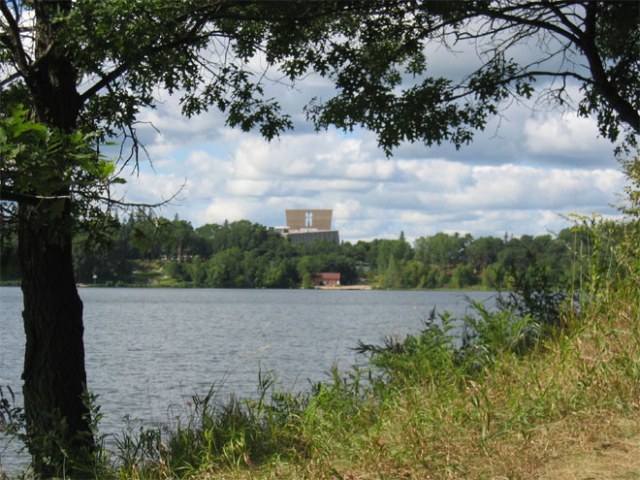
What put me over the top that day, other than feeling physically exhausted, was that when I finally stopped swimming I looked up and on the shore where I began, there stood a large cathedral poking through the trees, looking beautiful and formidable at the same time.
lifeshift-april2015-photo2

When I heard the church bells ringing, I figured it was best to turn back around and head back, and yet I resisted that because my whole life has been oriented around the church, maybe not a towering steeple, but a sanctuary with the sounds of organ, calls to prayer, and so on. The church has always been a compass for me. And yet that day in the lake, my own self-doubts and my own grievances and disappointments with the Mennonite Church and Christianity in general could not be ignored. I wanted to swim away from, not toward the church.

And yet swimming toward the other, unfamiliar shore felt analogous to leaving my vocation as a pastor. There were only trees and a primitive looking building on the other side. What would I find on the other side in a new vocation? I feared what this choice would mean for me. And so I floated on my back for awhile, tears falling in the lake.

Fortunately one of the lifeguards on duty had seen me go out, and was hovering near the buoys and somehow he sensed I might be in trouble. Before I knew it he was beside me standing on his Tom Sawyer-like raft. Who knows? Maybe he saved a life that day and he didn’t even know it.

Seeing him come toward me allowed me time to catch my breath and stop sobbing. He made sure I was ok, which means I lied and said I was fine. “What’s on the other side of the lake?” I asked. “How about we can find out together? Either way you have the same distance. Your choice.”

So off we went. And when we got to the other shore, sure enough there was this rustic chapel where people go for spiritual retreats. After poking around a bit, I enjoyed a long walk back to campus through the woods of Minnesota, barefoot, alone, cold, and exhausted, but grateful to be alive and strangely content.

During that walk home and many times since then, I’ve thought about all of the people, like that lifeguard, who have offered me a metaphorical life jacket, often coming alongside me at just the right moment when the various tugs threatened to undo me. Something else, more profound happened on that walk home. I kept hearing the lifeguard’s words, “Your choice.” Thanks to his reassurance, I realized that I really did have a choice of whether I stayed or left  congregational ministry, and that if I did indeed leave being a pastor, I would be ok too because people, like this lifeguard, would help me find out what was on the other side.

I ended up not leaving my job as a pastor. Actually, I returned to where I was serving as pastor more energized than ever before, with a new found joy and freedom.  What I left behind in that lake, other than my tears, was a sense of obligation and duty. And what I gained was a new found confidence that I could actually choose this vocational path for no other reason than because I believed it had beautiful potential.

I won’t go so far to say that my swim that summer day was a re-baptism, but it was an experience of reorientation and transformation that has had a profound affect on me, and that keeps me afloat even when so much still threatens to unravel me.

So hats off to you, Collegeville. I knew that eventually, even if five years later, this writing conference would inspire at least one written reflection. More importantly, it helped launch me into another five years (and counting!) of pastoral ministry. I’m still afloat, thrashing around now and then, but looking forward to another five. Lifeguards everywhere, beware.

Recently I was asked in an interview if I had “any advice to offer other women who are maybe feeling a call to ministry, or maybe women who just in general are feeling a call to a professional role that maybe has not always been filled by women. What  might you offer to them, or what might you want people to know about the position you have and what it has been for you? ”

Here was my response from the transcript:

Ruth: Well, I certainly am very mindful of who might come after me. And as I look out into the congregation and especially see the young girls I – yeah, I just hope whatever I do would, at least – at the very minimum, cause both (whatever your gender) that permission to see what I’m doing as a possibility for them, someday – you know? So what advice, is that the question?

Katie: uh-huh

Ruth: I think finding, sort of a sense of purpose, or fulfillment – finding your place in terms of any kind of job or vocation or calling – it’s really hard. And I’ve taken many many long walks. I’ve cried many tears…But that’s all been worth it. And so I guess that I just want to trust that people will find their sense of purpose or call, whether it’s in the church or not, someway and have the experience of feeling a lot of joy in what they do. But it’s not easy. And a lot of times we all will feel intimidated and scared and ill-equipped, but part of what I think I’ve learned over time is to just keep showing up, keep learning as much as you can, bouncing back from mistakes, not hiding in shame, and just – I don’t know – showing up is really key to a lot of things.

Posted in Uncategorized | 3 Comments

Soundtracks of faith

fullsizerender

Did you wonder what instrument Rosi was playing last Sunday? It’s a melodica.

Rosi Penner Kaufman, Music Ministries Director at Rainbow, will preach this coming Sunday on the theme of Mennonites and music. She has much wisdom and experience to offer us on this subject. Here are links to just a few of her written reflections on this subject:

Just keep singing

Noted

To further prime the pump for Sunday, I share this reflection on Mennonites and music by Melissa Florer Bixler, Pastor of Raleigh Mennonite Church:

…If there is one thing I know about Mennonites, it is that we sing. We sing in Spanish and Swati and, yes, in low German. We sing on school buses and around camp fires, in refugee camps and at protests. Mennonites sing in four-part harmony, to the rhythm of the djembe, with guitars and organs, a cappella and to the sweet sound of the Flutes of the Spirit.

Gathered here we are a body, a body that sings.

Singing is one way to understand this life, this particular life of faith that flows out of Anabaptism, the faith we are working out within this context of the body of the Mennonite church here in Raleigh.

What I love about singing is that everyone’s voice matters. There is no one without a gift, even if that gift happens to be in the area of sound equipment rather than the singing itself. When we sing, we need each other’s voices. We listen to the voices around us. We adjust our sound – not too loud, not to soft. We are best when our voices blend, all together, when all the parts are covered, when no voice is left out.Singing is a way to think about how we do church together, our Mennonite way of being the church. We all bring something to this congregation. What we say here is that no one is without a gift and that no gift is more important than another. To make the song work, to make it worship, we need everyone – me no less than you.

That’s something we learned from the very first Mennonites. Our church was birthed out of a conviction that it wasn’t just the bishop or the pope or even the priest who interceded between the people and God…We all bring something to the body. We all have a voice to lend to the choir. And without all the voices we are incomplete. We need you, not just to show up on Sunday but to preach and teach, to serve the bread and cup and to nurture, to care and prophesy.

What we also find when we sing is that our song is not a possession, something we can tie down. Communal singing is a gift, one that we simultaneously give and receive. We don’t have control over it. We get to be a part of it, to participate in it, the gift of it, of figuring things out together.

Being Mennonite is like that, too. Coming into this faith is something that happens to us, and is always happening to us. Being Mennonite is not something rooted in birth or cultural traditions. It’s a disposition of patience, a slow coming into the life of a community, being vulnerable to one another’s voices, of learning how to receive the gift of another.

…There are many times when I’ve secretly seated myself behind the strongest alto I can find so that I can get through a difficult harmony in a complicated hymn. And when we sing songs that are new to me, songs you have brought, I need you to teach them to me. We hear each other’s stories, learn each other’s songs, and we’re open to having ourselves be changed in the process. We come both offering and receiving, recognizing that being incorporated into the life of the church means simultaneously taking up practices that may have been foreign to us, but also bringing what has formed our faith over time.

Perhaps most remarkably, in Mennonite churches we sing the songs of our historic enemies. Each time we sing one of the old Lutheran or Catholic hymns, I remember that the first generation of Anabaptists were killed for their faith by the Lutheran and the Catholic churches. Even the word “Anabaptist,” was given to us by our enemies. We call ourselves “the re-baptizers,” a name shouted in scorn before drownings and burning and beatings.

We are a body that has found a way to sing the songs of our enemies, to recognize that reconciliation is always possible, even when it takes patience, even when the horrors and crimes are immense.

We can sing like this because of Jesus. We sing like this because you have been brought here by the conviction that ours is a song the world needs to hear, because we believe that God’s peace is making all things new. We sing because this is where the body of Christ happens – here, in our invitation to others to bring their voices, to bring their gifts into God’s life.

We can only know this Jesus when we follow him in the body, only when our bodies are engaged in the work of being disciples. We sing because we see in Jesus the one who showed us the way of peace, God’s son who shows us how to love our enemies, how to act in justice, how to persist in persecution, when all seems lost.

Being Mennonite insists that we are a people whose faith takes place in bodies that sing, bodies that find their way into a common life. This life is constantly changing and always near to the cry “Jesus is Lord.” We are a body always ready to see how the Holy Spirit will act among us in a new way.

…A few months ago we had a guest preacher join us from EMU. We were in the middle of the soundtrack of faith Sunday school class, the one where each week we sang different songs that have formed our faith over time. When Daryl walked into our worship space he saw some of us sitting in a circle and he asked me, “is this your choir?” I told him, “this is some of them!”

As Mennonites, we’re all the choir, learning from one another, adjusting our voices, finding out what we have to give up and what we bring, patiently discovering the gifts we each bring, the part which we will sing.

That’s something I’ve always loved about the Mennonite church. There’s no rule book to read. In fact, our confessions, our statements of belief are ever changing. Our confessions of faith respond to the current questions, the current claims, what we’re asking right now. We find out how to be Mennonite by being Mennonite. We learn how to sing by singing together, listening for the parts over time, asking for help when we can’t quite get the tune, or realizing that we need to sing a new song, that the songs we are singing now aren’t the songs we need to be singing.

Baptism is the time when we say yes to singing together, when we say we’re ready to listen, adjust our voices, that we’re ready to change the way we sing to adjust to others. This is the time we say we’re ready to figure out how our voice fits into the choir. We’re ready to stick it out together, even when we’re not singing so great.

You can read her full article here, along with other sermons she has preached recently on the subject of Being Mennonite: https://signonthewindow.wordpress.com/

Posted in Uncategorized | Leave a comment

Sculpting a Mennonite experience

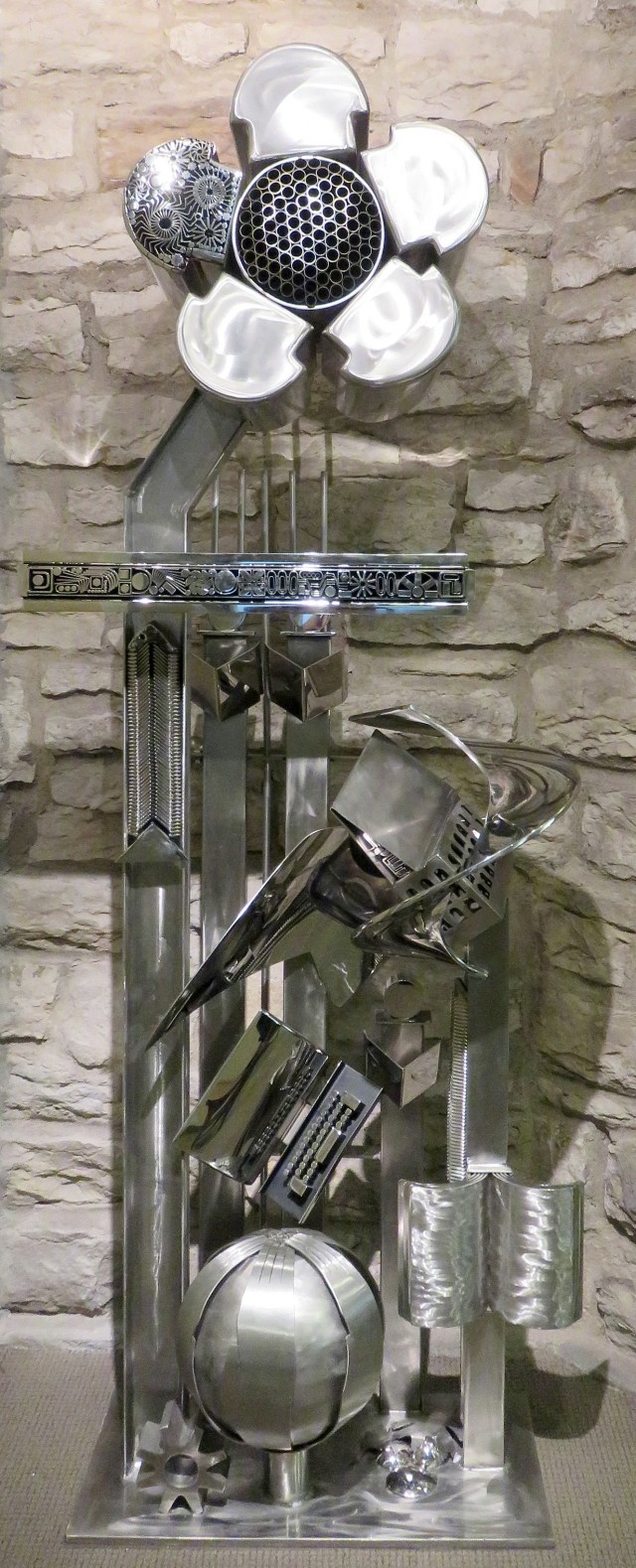
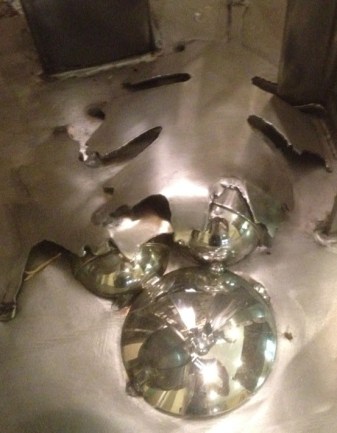
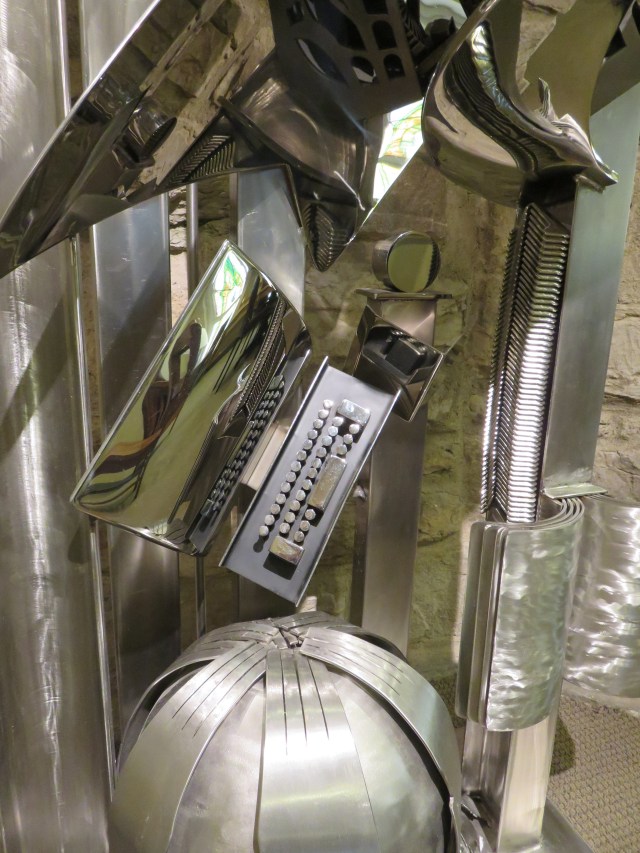
Since we are in the midst of a worship series on “Being Mennonite,” I thought it was time to highlight one of Arlie Regier’s sculptures found in the Sunflower Room west of the Sanctuary. While Arlie did not give this piece a title (to my knowledge), some people affectionately call it “A Mennonite History Piece,” a visual representation of Anabaptist theology, practice, and experience, especially of Kansas Mennonites on the prairie.

aregiersunflowersculpture-012917-1

Arlie didn’t leave much information about this sculpture. Perhaps, as suggested by his daughter Amy, he wanted to “let the changing community interpret and apply to the changing world.” While the following interpretive remarks are just that–interpretive, they represent what I’ve gleaned over these past three years at Rainbow.

In 2008 Arlie was commissioned to build this piece for what is called the Sunflower Room at Rainbow. The Sunflower of course is the KS state flower. Some see loaves of bread in the sunflower, perhaps referring to the KS wheat fields and/or Jesus sharing fish and bread with his disciples (Matthew 14:13-21).

aregiersunflowersculpture-012917-8In their book “Singing: A Mennonite Voice,” Marlene Kropf and Kenneth Nafziger talk about singing as a Mennonite sacrament of sorts. Here are two people singing, perhaps with the musical staff behind them. Some have said that these singers also represent the East Hill Singers, a core program of Arts in Prison at the Lancing Correctional Facility. Thanks to the vision of Mennonite conductor and former Rainbow congregant Elvera Voth, East Hill Singers offers the men of the East Unit the opportunity to experience great choral music in a personal way, and it provides fellowship between inmates and community singers.

Daughter Ami remembers Arlie saying that the image of a single figure (below) might refer to person at the pulpit, engaging in meaningful work of sacred literature. The open book (below) might refer to the Bible, or sacred literature, or as a symbol of education. Mennonites have always believed that we must interpret Scripture in a Christ-centered way, which is to say that the narrative of Jesus’ life provides for us the interpretative key for how we view all of scripture.

Can you see a KS tornado in the image below? Arlie supported the work of Mennonite Disaster Service, a volunteer network of Anabaptist churches that responds to those affected by natural disasters such as tornadoes. Daughter Ami writes: “Dad felt strongly about the importance of such service acts and appreciated the Mennonite translation of discipleship into service actions.” Can you also see a sword being transformed? At Arlie’s memorial service we read Isaiah 2:4b: “They shall beat their swords into plowshares, and their spears into pruning hooks; nation shall not lift up sword against nation, neither shall they learn war any more.” Some see this sword-into-plowshare movement and struggle in this piece.

aregiersunflowersculpture-012917-3

Arlie enjoyed finding artifacts from salvage yards. From Amy: “He giggled about this object resonating with the Bethel College threshing stone, but it has one excess spoke (threshing stones always have 7).”

img_4024

Every year on a Saturday close to Easter, Rosedale residents and church members enjoy the Easter egg hunt in Whitmore Playground. Hundreds of dyed eggs and candy are hidden.

img_4026

Arlie often spoke of restoration, creativity, and possibility. There is a movement in this piece from rural to urban, from past to future. Again from Ami: “The sculpture shows a big complex system of process, with excess creativity that always wants to connect and make something else.” There are, she writes, “a lot of representations of creative process and struggle.”

aregiersunflowersculpture-012917-4

Finally, here is poem by Arlie’s wife, Sue:

I see a collection
of shiny parts-
a typewriter whose creator
never pressed ENTER,
metal fingers affirming
unbending togetherness,
individual, shiny petals
circle center seeds of a plant.
Are Mennonites, people of The Book,
a collection of humans,
anchored, like I Beams,
amidst solid stones?

Arlie Regier (1931-2014) grew up on a farm near Burrton, Kan. He attended Bethel College and married Cornelia “Sue” Neufeld. They had four children David, Paul, Beth, and Ami. Arlie, a former industrial education teacher in the Shawnee Mission School District, specialized in welded steel. Here are some of his other sculptures that we are graced to have in our care here at Rainbow.

Many thanks to Jan Buerge for the beautiful photos. And please share your own interpretive remarks!

Posted in Uncategorized | 1 Comment